TABLE OF CONTENTS
Make a Book in Minecraft: Crafting, Uses & Secret Tips
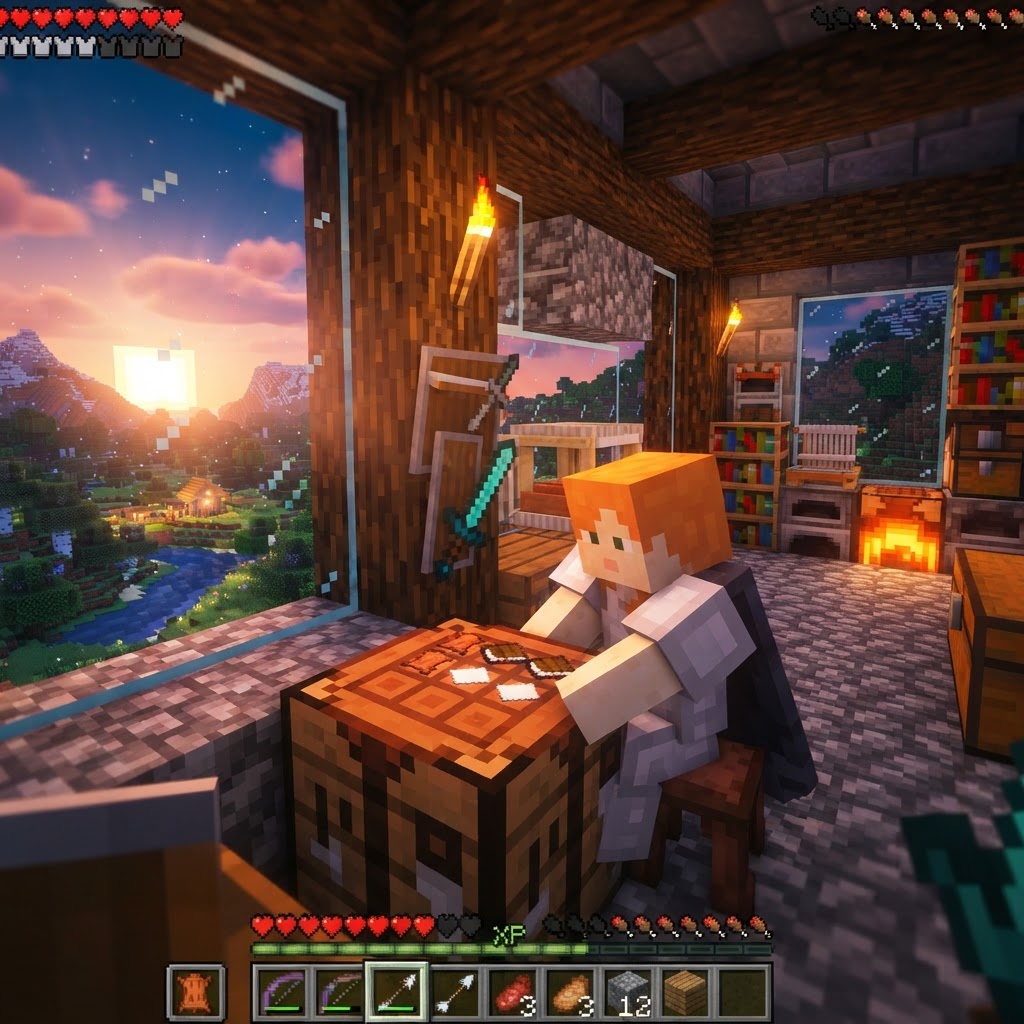
Books are one of Minecraft's most underrated crafting items — players who ignore them early game consistently hit a wall when they try to set up enchanting, store knowledge, or build automation systems. Whether you're rushing toward an enchanting table or building a massive library, understanding how to craft and use books efficiently will save you hours of frustration.
Why Books Matter More Than You Think
Books aren't just paper — they're the foundation of Minecraft's most powerful systems.
Most players craft their first book by accident or out of curiosity. The moment they realize it's required for an enchanting table, they scramble to understand the full crafting chain. Here's the real picture: books sit at the center of three critical game systems — enchanting, written communication, and villager trading. Skipping over how they work properly means you'll waste leather, miss efficiency shortcuts, and potentially soft-lock your early progression.
Books also stack up to 64, are renewable through farming, and can be combined with other items to create some of the most powerful objects in the game. The investment in understanding them pays off repeatedly from early survival all the way into late-game automation.
Gathering Your Materials: Paper and Leather
The bottleneck isn't the crafting — it's knowing where to get what you need, fast.
A standard book requires 3 Paper and 1 Leather. Simple on paper (pun intended), but both materials have specific sourcing strategies that dramatically affect how quickly you can scale your book production.
Getting Paper
Paper is crafted from Sugar Cane, which grows along water edges in most biomes. You need 3 Sugar Cane to make 3 Paper, which is a 1:1 ratio — so 9 sugar cane makes 9 paper, enough for 3 books.
Steps to get paper efficiently:
- Find sugar cane near rivers, lakes, or ocean shores
- Harvest the top two blocks only — leave the bottom block to regrow
- Build a simple canal-based sugar cane farm for passive growth
- Craft sugar cane into paper: place 3 sugar cane in a horizontal row in the crafting grid
- Early game: Kill cows near your spawn. You only need a few books to start.
- Mid game: Build a cow breeding farm. Breed cows with wheat, then cull the herd for consistent leather drops.
- Automated: A mob farm with cows and hoppers feeding a chest makes book production essentially hands-free.
- Labeling chests in large storage systems
- Writing coordinates for important locations
- Leaving notes in multiplayer servers
- Creating in-game lore or manuals for your builds
- Enchanted books can store specific enchantments
- You can apply them to tools, weapons, and armor via an anvil
- Books can hold enchantments that specific items can't receive directly (combination stacking)
- Basic recipe: 3 Paper + 1 Leather → 1 Book
- Paper source: 3 Sugar Cane → 3 Paper (horizontal row)
- Leather source: Cows, horses, llamas, hoglins
- Java recipe: Shapeless (any grid position)
- Bedrock recipe: Shaped (specific positions)
- Bookshelf recipe: 6 Wood Planks + 3 Books
- Max enchanting boost: 15 bookshelves, 1-block air gap
- Best mid-game use: Enchanted books via librarian trading
Getting Leather
Leather drops from cows, horses, llamas, donkeys, mules, and hoglins. The average cow drops 0–2 leather per kill, which is unreliable for large-scale book production. Here's how to fix that:
Crafting the Book: Step-by-Step
The actual recipe is simple — but the placement matters and varies by version.
Java Edition Recipe
In Java Edition, the crafting recipe for a standard book is shapeless, meaning you can place the 3 paper and 1 leather anywhere in the crafting grid.
Bedrock Edition Recipe
| Slot Position | Item |
|---|---|
| Any 3 slots | Paper (x3) |
| Any 1 slot | Leather (x1) |
Bedrock Edition uses a shaped recipe where placement matters:
Comparison: Java vs. Bedrock Crafting
| Row | Column 1 | Column 2 | Column 3 |
|---|---|---|---|
| Top | Paper | Paper | — |
| Middle | Paper | Leather | — |
| Bottom | — | — | — |
| Feature | Java Edition | Bedrock Edition |
|---|---|---|
| Recipe Type | Shapeless | Shaped |
| Paper Required | 3 | 3 |
| Leather Required | 1 | 1 |
| Result | 1 Book | 1 Book |
| Crafting Grid Flexibility | Any arrangement | Specific positions |
Book Variants and Their Uses
A plain book is just the beginning — here's what you can actually build with it.
One of the biggest mistakes players make is treating "make a book" as the end goal. The book is a crafting ingredient, not a finished product. Here's what you can — and should — make from it:
Book and Quill
Combine a Book + Ink Sac + Feather to create a Book and Quill, which lets you write text. These are invaluable for:
Enchanted Book
Place a book in an enchanting table to create an enchanted book. This is one of the most powerful uses:
Bookshelf
Craft 6 Wood Planks + 3 Books to make a Bookshelf block. Bookshelves placed within 2 blocks of an enchanting table boost your maximum enchantment level — up to level 30 with 15 bookshelves.
Book of Knowledge (Villager Trading)
Librarian villagers sell enchanted books for emeralds. This is a major reason to stockpile plain books: you can trade them to librarians to acquire specific enchantments you can't easily get from random table enchanting.
Comparison: Book Variants at a Glance
| Variant | Crafting Ingredients | Primary Use | Difficulty to Obtain |
|---|---|---|---|
| Book | 3 Paper + 1 Leather | Base crafting material | Easy |
| Book and Quill | Book + Ink Sac + Feather | Writing/labeling | Easy |
| Enchanted Book | Book + Enchanting Table | Store enchantments | Medium |
| Bookshelf | 6 Planks + 3 Books | Boost enchanting table | Easy |
| Written Book | Signed Book and Quill | Share text, lore | Easy |
Common Mistakes Players Make
These are the errors that cost players time, resources, and progress.
1. Not building a sugar cane farm early enough
Players constantly run out of paper because they rely on wild sugar cane. A 10-block canal farm produces enough paper for dozens of books passively. Build it on day one and forget about the paper shortage entirely.
2. Forgetting leather scales with mob farming
If you're killing cows only when you need leather, you'll always feel behind. A simple 5x5 breeding pen with wheat on hand keeps a leather supply running in the background.
3. Treating books as a destination, not a material
New players craft a book, put it in a chest, and move on. The book needs to become a bookshelf or an enchanted book or a Book and Quill to have real value. Recognize it as an ingredient.
4. Ignoring the Bedrock-shaped recipe
Cross-platform players and those switching versions frequently get tripped up here. Always verify which version you're on before debugging a "why won't this work" crafting issue.
5. Not placing bookshelves correctly for enchanting
Even experienced players sometimes build a ring of bookshelves directly against the enchanting table. You need a one-block gap (air, not solid blocks) between the shelf and the table for the boost to register. Torches, carpet, and other blocks in that gap will break the connection.
Pro Strategies for Book Production
Once you understand the basics, these approaches separate efficient players from everyone else.
Auto-Farm Your Paper
Sugar cane farms can be fully automated using observers and pistons. Place an observer facing the top sugar cane block — when it grows, the observer fires a piston that breaks it. A hopper and chest beneath collect everything. This farm runs while you sleep, explore, or build, and you'll never think about paper again.
Villager Lock-In for Enchanted Books
Librarian villagers randomize their enchanted book trade on first interaction. If you don't like the enchantment offered, break and replace their lectern to reset the trade. Keep resetting until you get a high-value enchantment like Mending, Silk Touch, or Fortune III. Then lock in the trade by completing it once — that villager will sell that enchantment forever.
Bulk Trading for Emeralds
Paper itself trades with librarians at a rate of roughly 24 paper for 1 emerald in many seeds. With an automated sugar cane farm, you can generate massive emerald income by trading paper before it even becomes books — then use those emeralds to buy specific enchanted books from your locked-in librarians. This creates a self-sustaining enchantment economy.
Book and Quill Coordinate System
Serious builders use a Book and Quill as a permanent in-game coordinate notebook. Write down your base coordinates, nether portal locations, stronghold positions, and notable biomes. Sign the book (to preserve it permanently) and keep it in your hotbar. This replaces the need for any external app or screenshot folder.
Maximizing Enchanting Table Coverage
You need exactly 15 bookshelves for maximum enchantment level. Arrange them in a 5x4 pattern (with a corner gap for the table) or a full ring with a door gap for access. More than 15 bookshelves provides zero additional benefit — don't waste resources stacking them higher.
Quick Reference Summary
Everything you need at a glance.
Books look simple until you realize they connect paper farming, leather production, enchanting optimization, villager trading, and even multiplayer communication into one unified system. Master the sourcing, automate your production, use the Bedrock recipe if needed, and stop treating the book itself as the goal — it's a gateway. The players who build efficient book pipelines early are the same ones who have Mending on every tool and Fortune III on their pickaxe while everyone else is still grinding a basic enchanting table. That's the real reason to learn this properly.
RELATED ARTICLES
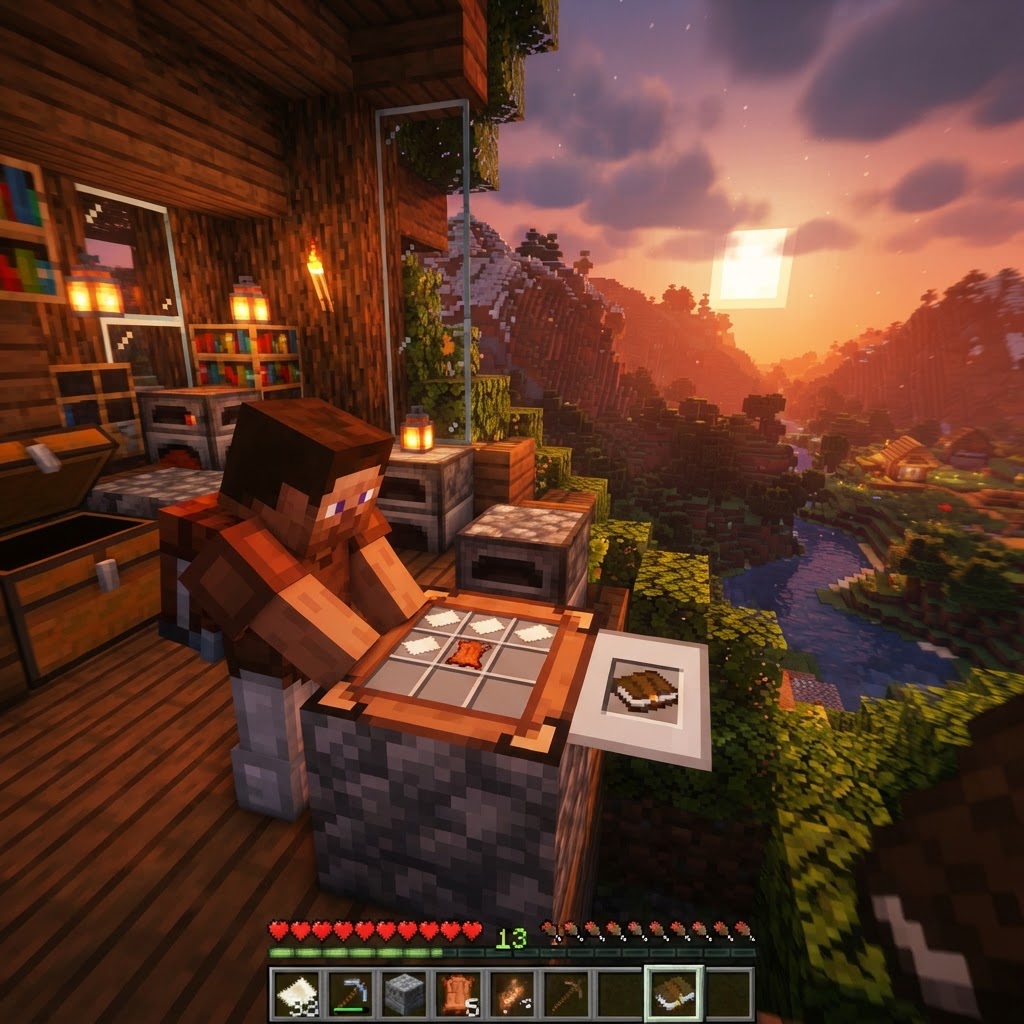
How to Make a Book in Minecraft: Easy Recipe & Uses
You're probably here because you just hit a wall — enchanting, writing, or crafting something advanced — and realized you need books but aren't sure how to get them efficiently. Books are one of Minec...
How to Make a Blast Furnace in Minecraft: Recipe & Uses
If you've been manually smelting ores one by one in a regular furnace, you're wasting serious time — the Minecraft blast furnace doubles your smelting speed for metals and ores, making it one of the m...
How to Make a Smoker in Minecraft: Recipe & Uses
If you're tired of waiting forever for your food to cook in a standard furnace, the smoker is the upgrade you didn't know you needed. It cooks food items at exactly twice the speed of a regular furnac...
STAY UPDATED
New blog posts, guides, and community tips delivered to your inbox.
No spam. Unsubscribe anytime.
Comments (0)
No comments yet. Be the first to share your thoughts!

