TABLE OF CONTENTS
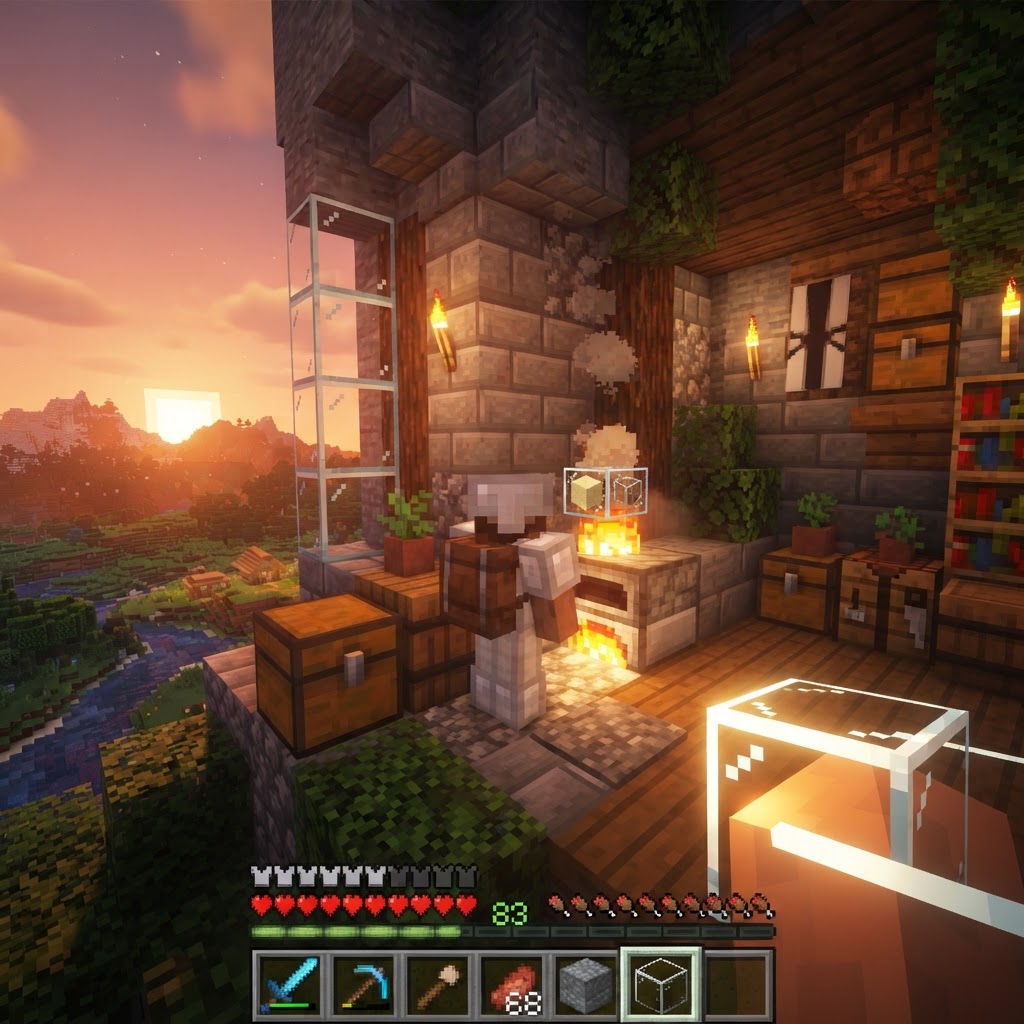
How to Make Glass in Minecraft: Easy Recipe & Uses
Glass is one of those Minecraft materials that seems simple until you actually need a lot of it — for a build, a greenhouse, a beacon base, or stained windows — and suddenly you're scrambling for sand and fuel. This guide exists because most tutorials stop at the basic recipe and leave you to figure out efficiency, color variants, and common pitfalls on your own. We'll cover everything from your first pane to mass-production strategies so you're never sand-poor mid-build again.
Making Basic Glass in Minecraft
The foundational recipe every builder needs before anything else.
Making glass is a single-step smelting process, but understanding each input helps you scale up fast when a big build demands hundreds of blocks.
What you need:
- Sand or Red Sand (1 per glass block)
- Any fuel source (wood, coal, lava bucket, etc.)
- A furnace or blast furnace
Step-by-step:
- Open your furnace interface
- Place Sand or Red Sand in the top slot
- Place your chosen fuel in the bottom slot
- Wait for the smelting animation to complete
- Collect your Glass from the output slot
- Lava farm: Lava buckets smelt 100 items each. A dripstone lava farm with cauldrons provides infinite fuel and is the gold standard for mass smelting.
- Kelp farm + dryer: Grow kelp, smelt it into dried kelp, craft dried kelp blocks. Each block smelts 20 items and the whole system is renewable.
- Charcoal loop: Chop wood, smelt logs into charcoal using the first logs as fuel — a self-sustaining early-game option.
- Greenhouses and farms: Glass roofs let sunlight through for crop growth while keeping mobs out
- Beacon pyramids: You can see the beacon beam clearly through glass floors above it
- Aquariums: Glass walls + water + fish = one of the best decorative features in any base
- Windows and storefronts: Panes give realistic depth to any house or shop build
- Nether observation rooms: Tinted glass blocks let you observe mobs without triggering aggro from Endermen (tinted glass is transparent to the player, not to the game's line-of-sight)
- Map room skylights: Natural light without weather exposure
- Cathedral windows: Multi-color stained glass with iron bar framing is one of the most visually impressive builds in the game
Both sand types produce identical clear glass blocks. The distinction only matters if you're collecting sand from specific biomes and want to know whether red sand counts — it does.
Smelt ratios at a glance:
| Fuel Type | Items Smelted Per Unit | Notes |
|---|---|---|
| Coal / Charcoal | 8 | Best early-game balance |
| Wood Log | 1.5 | Inefficient, burns fast |
| Wood Plank | 1.5 | Same as log, avoid for bulk |
| Lava Bucket | 100 | Best for large-scale smelting |
| Dried Kelp Block | 20 | Renewable, excellent mid-game |
| Blaze Rod | 12 | Good if you have excess |
|---|
Glass Blocks vs Glass Panes: Choosing the Right Form
Using the wrong form costs you materials and kills your build's look.
Players constantly mix these up or default to one without knowing the tradeoff. Here's the real difference:
FeatureGlass BlockGlass Pane| Recipe | 1 sand → 1 block (smelted) | 6 blocks → 16 panes |
|---|---|---|
| Material efficiency | 1:1 ratio | 6 blocks yields 16 panes (2.67x efficient) |
| Best use | Walls, floors, large windows | Thin windows, medieval builds, detail work |
| Connects to neighbors | No | Yes — panes connect to adjacent blocks |
| Texture appearance | Full cube, thick look | Thin panel, more realistic window feel |
| Trapdoor compatibility | Pairs naturally | Can look awkward |
When to use blocks: Large modern builds, floors you want to walk on visually, skylights where thickness works aesthetically, beacon pyramids.
When to use panes: Window frames in houses, ships, castles, any build where a thin window looks better. The material efficiency alone makes panes the smarter choice for large window sections — 6 blocks giving you 16 panes is significant at scale.
Stained Glass: Complete Color Guide
Every color, every dye source, so you never guess at recipes.
Stained glass is where glass goes from functional to decorative powerhouse. The recipe is consistent: 8 glass blocks surrounding 1 dye in a crafting table yields 8 stained glass blocks. The same logic applies to stained glass panes using 8 panes and 1 dye.
All 16 stained glass colors and primary dye sources:
| Color | Primary Dye Source |
|---|---|
| White | Bone Meal or Lily of the Valley |
| Orange | Orange Tulip or crafted (red + yellow) |
| Magenta | Allium or crafted combination |
| Light Blue | Blue Orchid or crafted |
| Yellow | Dandelion or Sunflower |
| Lime | Sea Pickle (smelted) or crafted |
|---|---|
| Pink | Pink Tulip or crafted |
| Gray | Crafted (black + white) |
| Light Gray | Azure Bluet, Oxeye Daisy, or White Tulip |
| Cyan | Crafted (blue + green) |
| Purple | Crafted (blue + red) |
| Blue | Lapis Lazuli |
|---|---|
| Brown | Cocoa Beans |
| Green | Cactus (smelted) |
| Red | Poppy, Red Tulip, Rose Bush |
| Black | Ink Sac or Wither Rose |
For builds with color gradients or cathedral-style windows, plan your dye inventory before you start smelting. Running out of one specific dye mid-project is a common frustration.
Fuel Strategy and Smelting Efficiency
How you fuel your furnaces determines how fast and cheap your glass operation actually is.
Sand is almost always abundant — fuel is usually the limiting factor in large glass projects. Understanding fuel efficiency prevents the situation where you've mined 500 sand and have nothing to smelt it with.
Scaling your setup:
For small builds (under 100 glass), a single furnace with coal works fine. For medium projects (100–500), run 3–5 furnaces in parallel with coal or charcoal. For large builds (500+), switch to a dedicated fuel source:
Blast Furnace note: Blast Furnaces smelt ores and metal items only — they do NOT smelt sand. Stick to regular furnaces or smokers won't work either. Only the standard furnace handles glass production.
Common Mistakes Players Make With Glass
The errors that waste your time, materials, and patience.
1. Trying to use a Blast Furnace for sand
Blast Furnaces only process metal-type items. Sand doesn't qualify. Players waste time loading sand into one and wondering why nothing happens.
2. Forgetting that red sand makes clear glass
The assumption that red sand = tinted glass is natural but wrong. If you want tinted glass (the 1.17+ version made with amethyst shards), that's a separate recipe entirely.
3. Making Tinted Glass when they want dark stained glass
Tinted Glass (4 amethyst shards + 1 glass block) blocks light completely and isn't decorative colored glass — it's a utility block for hiding light sources or mob farms. Many players craft it expecting a dark visual and are confused by its behavior.
4. Not pre-planning stained glass quantities
Dyeing 8 blocks at a time means uneven leftover stacks. If your window design needs 45 blue glass blocks, you'll craft 5 batches of 8 and have 3 leftover. Map out your quantities before you start.
5. Placing glass and breaking it without Silk Touch
Breaking a glass block without Silk Touch destroys it entirely — you get nothing back. This is critical to know before decorating with expensive stained glass.
6. Underestimating how much glass a build needs
New builders consistently smelt 32 blocks thinking it's enough, then break flow mid-build making more. Smelt more than you think you need — glass stores fine and excess is never wasted.
Pro Strategies for Efficient Glass Production
For players who build at scale and want systems, not just recipes.
Build an auto-smelter array early
A 5-furnace array with input and output hoppers is a mid-game investment that pays back immediately. Drop 2,000 sand in the top chest, walk away, come back to 2,000 glass. The setup cost is about 20 hoppers and 5 furnaces — straightforward with iron.
Use sand duplication glitches selectively (Java only)
On Java Edition, the falling-block TNT duplication glitch allows infinite sand generation. If you're playing survival on a server or single-player Java, this is how large-scale builders produce unlimited glass without depleting ocean floors. Use this ethically — it's a known unpatched mechanic, not cheating, but verify your server's rules.
Desert temples and village chests for starter sand
If you haven't found a desert yet, ocean floors are rich with sand. A conduit-powered base near an ocean lets you strip-mine sand underwater efficiently.
Color-code your storage with stained glass item frames
Using one of each stained glass color as an item frame label on corresponding storage chests is a fast, visual organizational system. It costs 16 glass blocks per frame but saves navigation time in large storage halls.
Pre-smelt before major building sessions
Professional builders smelt in bulk before touching their build. Nothing kills creative momentum like pausing to wait for a furnace. Keep a buffer chest of 500+ clear glass blocks at your base as a standing reserve.
Best Uses for Glass in Minecraft Builds
Where glass actually earns its place in your inventory.
Glass production is a system, not just a recipe. Sand and dye are almost always available — your real bottleneck is fuel efficiency and planning ahead. Smelt in bulk, use panes when efficiency matters, always carry Silk Touch when placing stained glass, and never try to use a Blast Furnace for sand. Set up even a basic hopper-fed smelter early and you'll never hit a glass shortage mid-build again. The players who build the most impressive glass structures aren't doing anything magical — they just planned their materials before they started placing blocks.
RELATED ARTICLES
How to Make a Brewing Stand in Minecraft: Recipe & Uses
If you've hit a wall in Minecraft — mobs are one-shotting you, your armor feels useless, and the End seems impossible — a brewing stand is the tool that changes everything. Potions transform your surv...
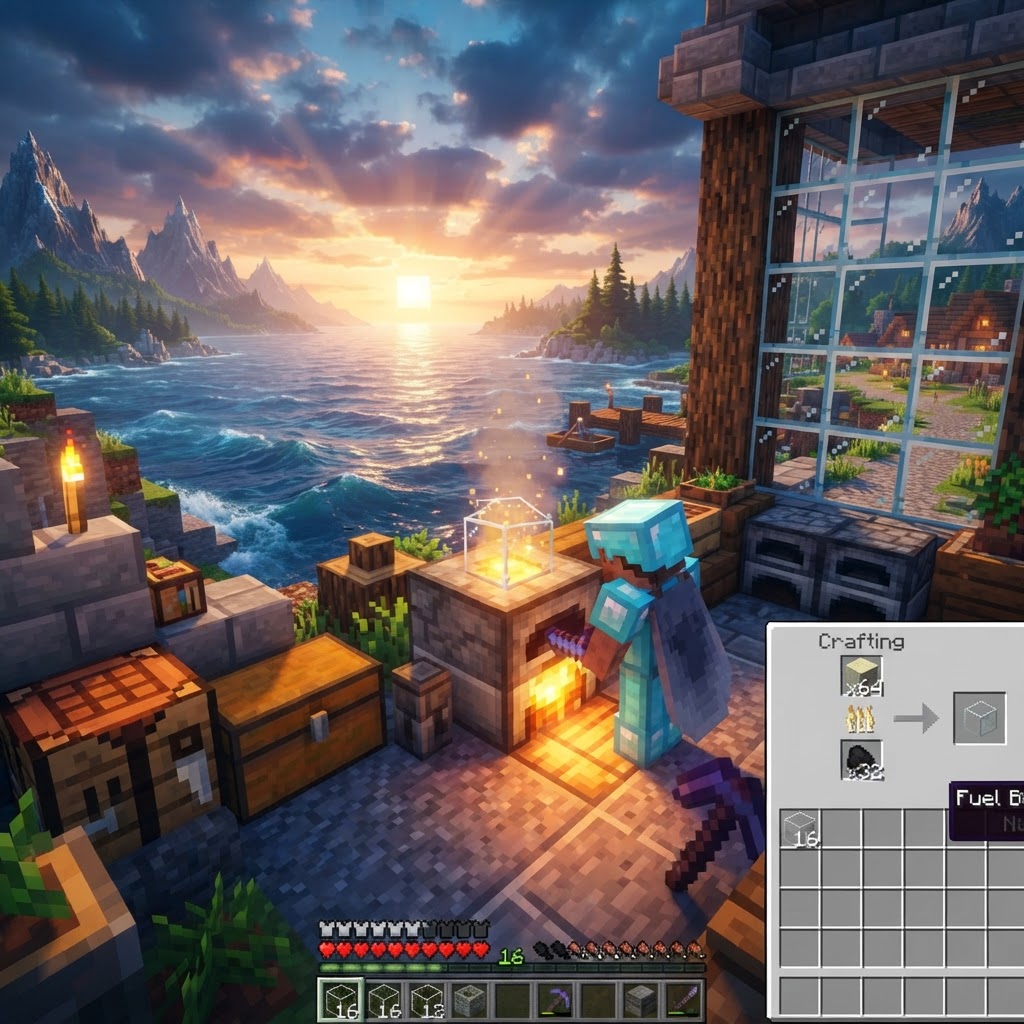
How to Make Glass in Minecraft: A Complete Smelting Guide
Glass is one of those crafting staples that looks simple on the surface but hides a surprising number of ways to go wrong — and a lot of creative potential most players never tap. Whether you're build...
How to Get Blaze Rods in Minecraft: Find and Farm Blazes
Blaze rods are one of the most critical bottlenecks in Minecraft progression — without them, you can't brew potions, reach the End, or craft Eyes of Ender. Most players die repeatedly trying to get th...
STAY UPDATED
New blog posts, guides, and community tips delivered to your inbox.
No spam. Unsubscribe anytime.
Comments (0)
No comments yet. Be the first to share your thoughts!

