
TABLE OF CONTENTS
How to Get a Minecraft Goat Horn: Complete Guide
If you've ever heard that dramatic horn blast echoing across a Minecraft world and wondered how to get one for yourself, you're not alone — the goat horn is one of the most satisfying items in the game for both communication and atmosphere. The problem is that obtaining one isn't obvious, the mechanics are easy to mess up, and most guides gloss over the details that actually matter. This complete breakdown covers every method, every variant, and every mistake so you walk away with exactly the horn you want.
What Is a Minecraft Goat Horn and Why Do You Actually Want One
Understanding the item before you grind for it saves time and frustration.
The Minecraft goat horn is a rare musical instrument item that plays a loud, distinct sound when used. It was added in Java Edition 1.19 and Bedrock Edition 1.19.0 as part of the Wild Update. When you right-click (or use the secondary action button), your character raises the horn to their lips and blasts a sound that can be heard from a significant distance — up to 256 blocks away depending on the variant.
Players want goat horns for several legitimate reasons:
- Base defense signaling — alert teammates across a large multiplayer server that something is happening
- Roleplay and atmosphere — horns fit perfectly in medieval or fantasy builds
- Raid and battle coordination — some horn sounds replicate in-game raid events, which creates immersive moments
- Collection — there are 8 unique horn variants, each with a different sound, making them collectible
- Redstone-adjacent fun — while horns don't trigger redstone directly, the sound cues can serve as manual coordination signals in team builds
- Find a mountain goat. Goats spawn in frozen peaks, jagged peaks, and snowy slopes biomes. They do not spawn in regular mountains.
- Identify the goat's behavior. Goats periodically rear up and charge at nearby entities (players, other mobs, armor stands). They ram every 30–300 seconds when a target is within range.
- Position a hard block in front of the goat's charge path. The goat must hit a hard block — NOT a soft block.
- Wait for the collision. When the goat successfully rams a hard block, it drops 1–2 goat horns.
- Pick up the horn immediately. Items despawn after 5 minutes.
- Loot chance: approximately 50% per chest in Java; similar rates in Bedrock
- You can find multiple horns per outpost raid
- This works even in biomes where goats don't spawn
- Capture a goat with a lead. Lead the goat down from its spawn mountain carefully — goats jump high and can escape.
- Build a small pen. Use stone or log walls (hard blocks) so every surface the goat could ram will trigger a horn drop.
- Build a secondary wall exactly 4–7 blocks in front of the goat. Goats aim at stationary targets. Stand outside the pen and let the goat lock onto you, then move behind the wall. The goat will charge and hit the wall.
- Use an armor stand as a dummy target. Place an armor stand inside the pen and outside simultaneously — goats will sometimes target armor stands, which means you don't even have to be present.
- Bring multiple goats. With 3–5 goats in separate pens, the frequency of horn drops increases dramatically. You can cycle between pens.
- For your first horn fast: Hit a Pillager Outpost chest — it's quicker than any farming method
- For normal goat variants (Ponder, Sing, Seek, Feel): Build a stone-walled pen near where goats spawn and use the armor stand targeting trick
- For screaming goat variants (Admire, Call, Yearn, Dream): Breed goats until you isolate a screaming variant, name tag it, and dedicate a separate pen to it
- For a full set of all 8: Combine both approaches — outpost looting for the basics, selective breeding for the screaming variants
The cooldown after using a horn is approximately 7 seconds, so don't expect to spam it in combat for any tactical advantage. The value is in the signal, not the frequency.
How to Get a Goat Horn: The Core Methods Explained
There are two ways to get horns — one reliable, one passive — and most players only know about one.
Method 1: Make a Goat Ram a Hard Block (Primary Method)
This is the main way to obtain a goat horn, and it requires a specific set of conditions most guides don't fully explain.
Step-by-step:
Hard blocks vs. soft blocks — this is where most players fail:
| Block Type | Drops Horn? | Examples |
|---|---|---|
| Stone | ✅ Yes | Stone, Deepslate, Granite |
| Wood Logs | ✅ Yes | Oak Log, Spruce Log |
| Packed Ice | ✅ Yes | Packed Ice, Blue Ice |
| Copper Block | ✅ Yes | All copper variants |
| Snow Block | ❌ No | Snow Block |
Method 2: Find Horns in Pillager Outpost Chests
| Powder Snow | ❌ No | Powder Snow |
|---|---|---|
| Regular Ice | ❌ No | Ice |
| Leaves | ❌ No | Any leaf block |
| Sand / Gravel | ❌ No | Sand, Gravel, Concrete Powder |
This is the passive method that players overlook. Goat horns can be found in Pillager Outpost chests as loot — specifically the instrument variants that match goat horns (Ponder, Sing, Seek, Feel — the "default" goat types).
All 8 Goat Horn Variants: What They Sound Like and How to Get Each
Not all horns are equal — screaming goat horns are rarer and have completely different sounds.
There are 8 goat horn variants split across two goat types:
| Horn Name | Goat Type | Sound Style | Chest Loot? |
|---|---|---|---|
| Ponder | Normal Goat | Low, contemplative tone | ✅ Yes |
| Sing | Normal Goat | Ascending, melodic | ✅ Yes |
| Seek | Normal Goat | Questioning, rising | ✅ Yes |
| Feel | Normal Goat | Soft, mellow | ✅ Yes |
| Admire | Screaming Goat | Intense, discordant | ❌ No |
| Call | Screaming Goat | Urgent, sharp | ❌ No |
|---|---|---|---|
| Yearn | Screaming Goat | Wild, erratic | ❌ No |
| Dream | Screaming Goat | Strange, haunting | ❌ No |
Screaming goats are a rare variant with a 2% spawn chance (roughly 1 in 50 goats). They look identical to normal goats but make an entirely different sound — a harsh screech instead of a normal bleat. The only way to identify one before it rams is to listen carefully or use a name tag to track it after confirmation.
Building an Efficient Goat Horn Farm
A proper setup turns a frustrating RNG grind into a controlled, repeatable process.
Instead of chasing random goats around cliffs and losing them to fall damage, build a controlled farm:
For screaming goat horns specifically, breed goats until you get a screaming variant (check the sound), then isolate it in a dedicated pen with hard block walls.
Common Mistakes Players Make When Hunting Goat Horns
These errors waste hours — knowing them upfront saves your whole session.
Mistake 1: Standing too close during the ram
If you're within the impact radius when the goat rams, you take knockback and the horn may drop in an awkward location. Stay back or use armor stands.
Mistake 2: Assuming all mountain biomes spawn goats
Goats only spawn in frozen peaks, jagged peaks, and snowy slopes. Regular mountain biomes (like meadows or stony peaks) do not reliably produce goats. Use F3 to confirm your biome.
Mistake 3: Using the wrong blocks in your farm
As covered above, snow and ice blocks won't drop horns. This is the single most common reason a farm fails — the player is in a snowy biome using snow block walls.
Mistake 4: Only hunting one goat type
Players often don't realize there are two distinct goat types producing different horns. If you want the full set of 8, you MUST identify and farm screaming goats separately.
Mistake 5: Ignoring Pillager Outposts entirely
Many players spend 30–60 minutes searching mountain biomes when a nearby outpost chest could have given them 2–3 horns in 5 minutes. Always check outposts early in your playthrough.
Mistake 6: Killing the goat after the first drop
Goats can drop horns multiple times across their lifetime (they have two horns by default). Don't kill your goat after one drop — keep farming.
Pro Strategies for Advanced Horn Collection
For players who want every variant, a perfect farm, or the fastest possible completion.
Strategy 1: Breed a screaming goat army
Since screaming goats have a 2% natural spawn rate but the trait can be inherited through breeding, breed two screaming goats together for a much higher chance of screaming offspring. Lock in the trait through generations.
Strategy 2: Use observers to track ram events
While horns don't interact with redstone, you can build a basic observer-hopper-chest system around the drop zone. Use observers facing the hard block wall to detect block state changes (not practical here), OR simply use a hopper beneath the floor of the farm area so horns automatically funnel into a chest rather than despawning.
Strategy 3: Name tag your screaming goat
Since screaming goats look identical to normal goats, use a name tag to mark your screaming goat before mixing it into a breeding program. This prevents confusion and ensures you always know which goats are producing the rarer horn variants.
Strategy 4: Trade routes for outpost raiding
On large multiplayer servers, Pillager Outposts respawn their loot when the chunks are unloaded long enough. Map out several outposts across your world and rotate through them for passive horn collection alongside your regular play.
Strategy 5: Sound identification in the field
Train yourself to recognize the screaming goat bleat — it sounds like a human screaming rather than a normal goat. When you hear it, stop everything and track that goat. Mark it, capture it, don't let it fall off a cliff.
Conclusion: Your Fastest Path to a Complete Horn Collection
The Minecraft goat horn is a genuinely rewarding item to collect, but only if you approach it with the right information. Here's the core takeaway:
The biggest time-wasters are wrong biomes, wrong blocks, and not knowing that screaming goat horns can't be found in chests. Avoid those three mistakes and you'll have a complete collection faster than almost any guide online will tell you is possible.
RELATED ARTICLES
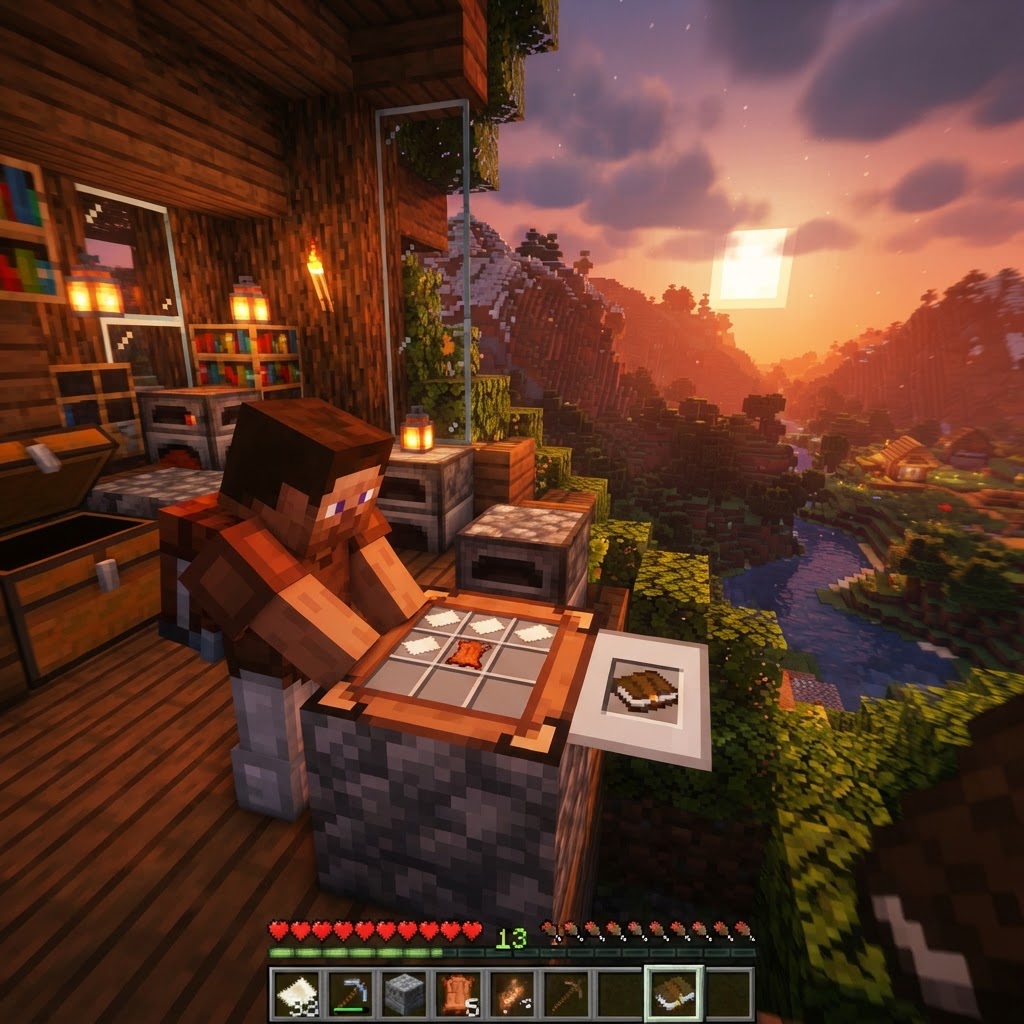
How to Make a Book in Minecraft: Easy Recipe & Uses
You're probably here because you just hit a wall — enchanting, writing, or crafting something advanced — and realized you need books but aren't sure how to get them efficiently. Books are one of Minec...
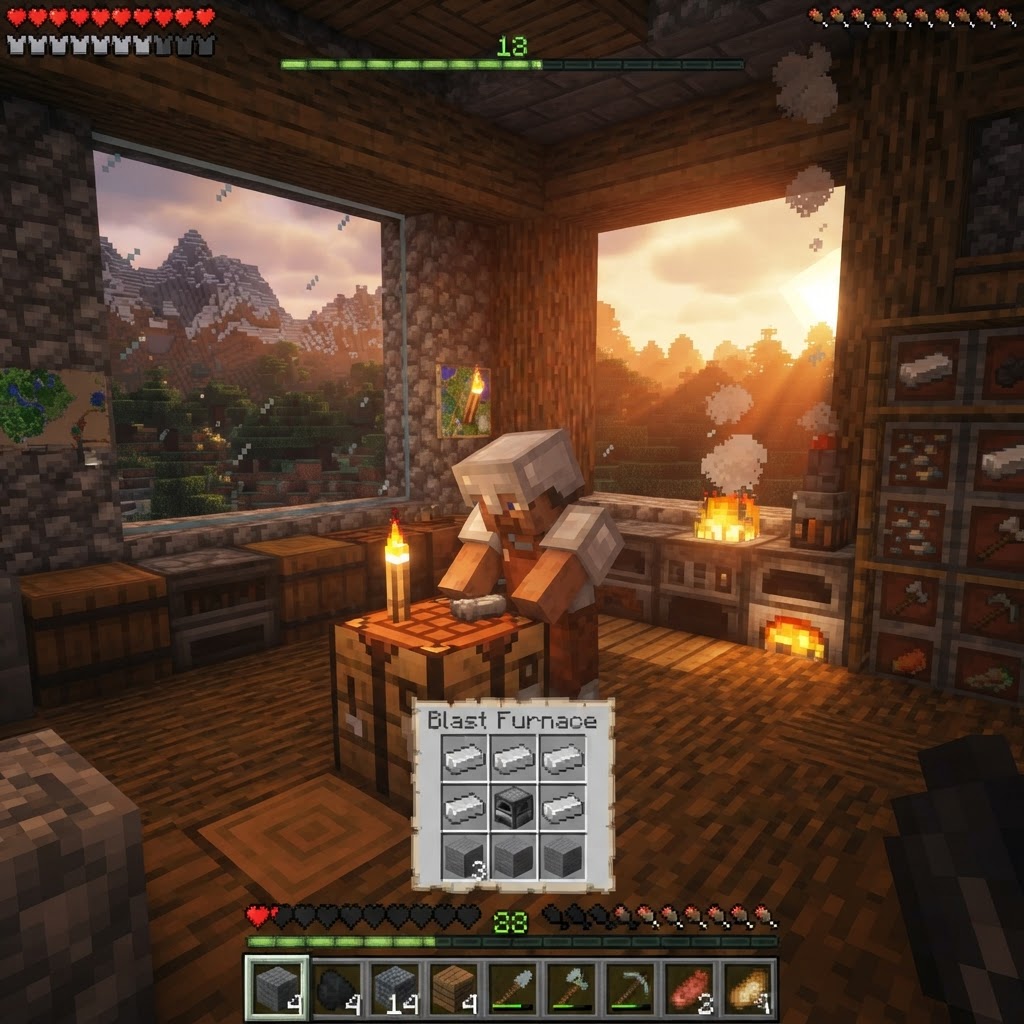
How to Make a Blast Furnace in Minecraft: Recipe & Uses
If you've been manually smelting ores one by one in a regular furnace, you're wasting serious time — the Minecraft blast furnace doubles your smelting speed for metals and ores, making it one of the m...
How to Make a Smoker in Minecraft: Recipe & Uses
If you're tired of waiting forever for your food to cook in a standard furnace, the smoker is the upgrade you didn't know you needed. It cooks food items at exactly twice the speed of a regular furnac...
STAY UPDATED
New blog posts, guides, and community tips delivered to your inbox.
No spam. Unsubscribe anytime.
Comments (0)
No comments yet. Be the first to share your thoughts!

