TABLE OF CONTENTS
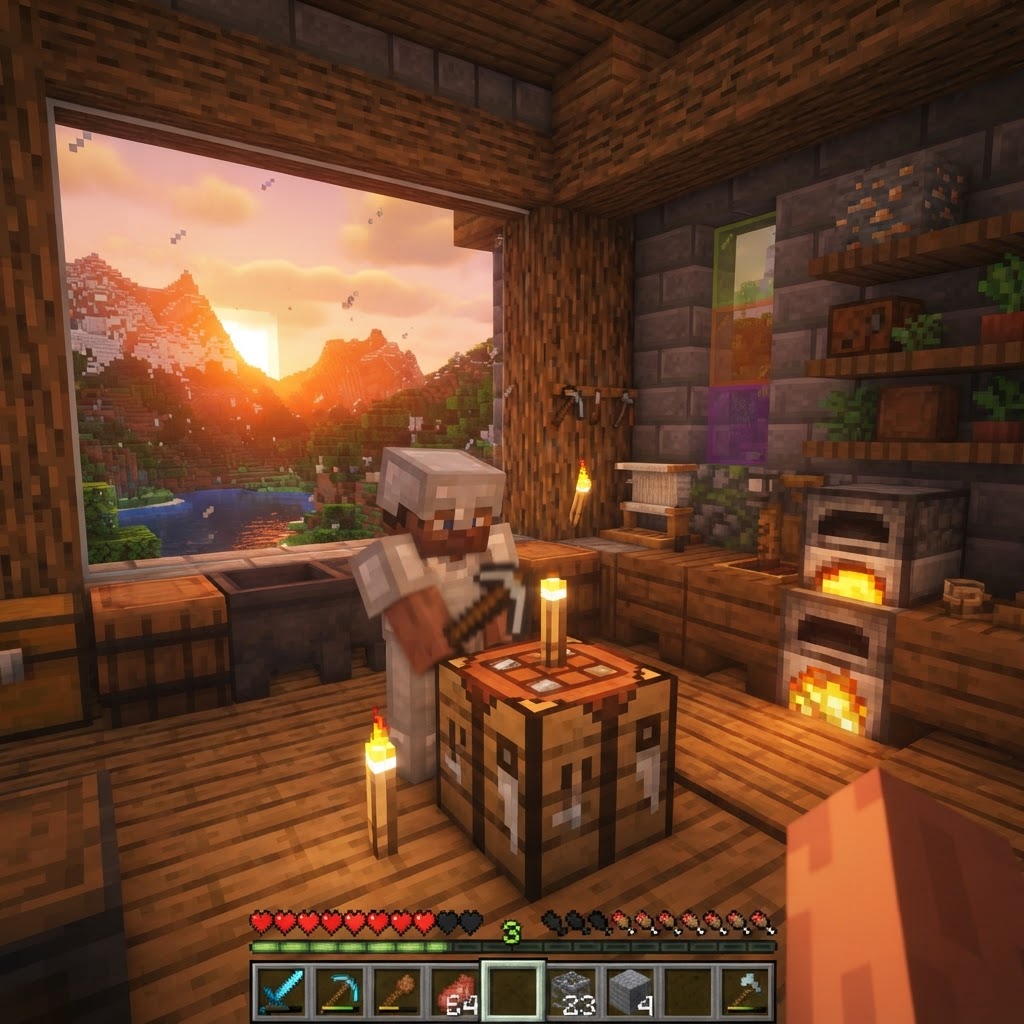
Blast Furnace Minecraft: Complete Build & Use Guide
If you're sitting on a mountain of iron ore or a chest full of armor you'll never wear again, a blast furnace is the single best investment you can make in your Minecraft world. It smelts ores and metal items at exactly double the speed of a regular furnace — and most players either don't build one early enough or misuse it once they do. This guide fixes both problems.
What Is a Blast Furnace and Why Do You Actually Need One
Speed-smelting is only part of the story — understanding the full picture changes how you play.
The blast furnace is a block that specializes in smelting ore blocks, raw metals, and metal-based armor and tools. It does this at twice the speed of a standard furnace while consuming fuel at the same doubled rate — so your fuel efficiency per item stays identical, but your time investment gets cut in half.
Here's why that matters in practice: late-game Minecraft involves processing enormous quantities of iron, gold, and copper. Waiting on a standard furnace when you've just strip-mined an entire layer of Y=-14 feels genuinely painful. The blast furnace eliminates that bottleneck.
It also has a secondary function most players overlook entirely: it serves as the job site block for the Armorer villager profession. If you want access to enchanted diamond armor from a villager trade, you need blast furnaces in your village. That alone makes it worth building even if you have plenty of regular furnaces already.
Crafting Recipe & Materials: Exactly What You Need
Get the recipe locked in before you waste a trip to the wrong biome.
What You Need to Craft One Blast Furnace:
- 5x Iron Ingots
- 3x Smooth Stone
- 1x Regular Furnace (already crafted)
That's it. Nine slots, three distinct materials. Here's the exact placement in a crafting table:
Crafting Grid Layout:
| Top Row | Middle Row | Bottom Row |
|---|---|---|
| Iron Ingot | Iron Ingot | Iron Ingot |
| Iron Ingot | Furnace | Iron Ingot |
| Smooth Stone | Smooth Stone | Smooth Stone |
The furnace goes dead center. Iron ingots fill the entire top row and both middle side slots. Smooth stone fills the entire bottom row.
How to Get Smooth Stone (Step by Step):
- Mine cobblestone with any pickaxe.
- Smelt cobblestone in a regular furnace → produces stone.
- Smelt that stone again in the furnace → produces smooth stone.
- Right-click the blast furnace to open the interface.
- Place fuel in the bottom-left slot (coal, wood, lava buckets, etc.).
- Place your ore or metal item in the top-left input slot.
- Collect your smelted output from the right slot.
- Find a village with at least one unemployed (non-nitwit) villager.
- Craft a blast furnace.
- Place it inside a structure where the villager can pathfind to it.
- Wait for the villager to walk to the blast furnace and claim it.
- Trade with them to level them up — early trades include iron armor for emeralds, which is easy to afford.
- At master level, they'll offer enchanted diamond armor pieces.
Material Sourcing at a Glance:
| Material | How to Get It | Common Stumbling Block |
|---|---|---|
| Iron Ingots (x5) | Smelt iron ore or raw iron | Need at least 5 — check your chest before crafting |
| Smooth Stone (x3) | Smelt stone (which is smelted cobblestone) | Requires two smelting steps, not one |
| Furnace (x1) | 8x cobblestone in a crafting table | Must be a standard furnace, not a smoker |
Early game tip: you'll need iron for tools and armor too, so try to mine a vein of at least 12-15 raw iron before dedicating 5 ingots to the blast furnace. The payback is fast — you'll recoup the investment in smelting speed almost immediately.
How to Use a Blast Furnace Correctly
Placing it is easy. Using it efficiently is a different skill.
Using a blast furnace works almost identically to a regular furnace:
The smelting animation runs at double speed compared to a standard furnace. You'll notice this immediately — an iron ore that takes 10 seconds in a regular furnace takes just 5 seconds in a blast furnace.
What the Blast Furnace CAN and CANNOT Smelt:
| Item Type | Blast Furnace | Regular Furnace |
|---|---|---|
| Iron Ore / Raw Iron | ✅ Yes | ✅ Yes |
| Gold Ore / Raw Gold | ✅ Yes | ✅ Yes |
| Copper Ore / Raw Copper | ✅ Yes | ✅ Yes |
| Ancient Debris → Netherite Scrap | ✅ Yes | ✅ Yes |
| Iron/Gold/Chainmail Armor & Tools | ✅ Yes (recycles to ingot) | ✅ Yes |
Fuel Efficiency Reminder:
| Coal Ore | ❌ No | ✅ Yes |
|---|---|---|
| Food items | ❌ No | ✅ Yes |
| Sand → Glass | ❌ No | ✅ Yes |
| Cobblestone → Stone | ❌ No | ✅ Yes |
| Wood → Charcoal | ❌ No | ✅ Yes |
The blast furnace burns fuel twice as fast — but it also smelts twice as fast. So one piece of coal still smelts the same number of items (8) as it does in a regular furnace. You're not saving fuel; you're saving time. Keep this in mind when budgeting resources.
Blast Furnace vs. Regular Furnace: When to Use Which
Owning both isn't overkill — it's the correct setup.
| Feature | Blast Furnace | Regular Furnace |
|---|---|---|
| Smelting Speed | 2x faster | Standard |
| Fuel Consumption | 2x faster | Standard |
| Items Per Fuel Unit | Same (no savings) | Same |
| Smeltable Items | Ores & metal items only | Universal |
| XP from Smelting | Slightly less per item | Standard |
| Villager Job Site | Armorer | Toolsmith / Smoker |
|---|---|---|
| Best Use Case | High-volume metal processing | Everything else |
The practical recommendation: keep at least one regular furnace for food, glass, and miscellaneous smelting, and use the blast furnace exclusively for metals. Many experienced players run a bank of 3-5 blast furnaces side by side for bulk processing after major mining sessions.
The Blast Furnace and Armorer Villagers: Free Armor Trades
This is the mechanic most guides completely skip — and it's one of the most powerful in the game.
If you place a blast furnace near an unemployed villager in a village, that villager will claim it as their workstation and become an Armorer. Armorers sell armor — and at higher trade levels (journeyman, expert, master), they sell enchanted diamond armor for a reasonable amount of emeralds.
This matters enormously for mid-game players who want diamond armor but don't have the resources to enchant it themselves yet.
How to Set Up an Armorer Villager:
Common Mistakes Players Make With Blast Furnaces
These errors cost time, materials, and progression — know them before you make them.
Mistake 1: Trying to smelt food or non-metal items in it.
The blast furnace interface accepts the item but won't process it. Players often leave food or wood in the input slot wondering why nothing is happening. Check the item type first.
Mistake 2: Thinking it saves fuel.
It doesn't. Same items per fuel unit as a regular furnace. Players sometimes hoard coal specifically for the blast furnace thinking it's more fuel-efficient. It isn't — use your regular fuel sources as normal.
Mistake 3: Not building it early enough.
Many players don't craft one until late game. But even in early-mid game, when you're smelting 20-30 iron per mining trip, the time savings add up fast. Build it as soon as you have 5 iron to spare beyond your tool budget.
Mistake 4: Confusing smooth stone with stone or stone bricks.
Already mentioned in the crafting section, but worth repeating because it's the #1 crafting failure for this recipe. Stone bricks will not substitute. Polished stone will not substitute. You need smooth stone from the double-smelt process.
Mistake 5: Ignoring the Armorer trade potential.
Using a blast furnace only for smelting and never leveraging the villager trade system is leaving a massive advantage on the table, especially for players who want diamond armor before they can reliably enchant it.
Mistake 6: Not stacking input items.
You can load a full stack (64 items) into the input slot at once. Players who smelt one item at a time and babysit the furnace are wasting significant time. Load it up, add fuel to match, and walk away.
Pro Strategies for Advanced Players
If you're already comfortable with the basics, these are the plays that separate good players from efficient ones.
Strategy 1: Build a dedicated smelting room with 4-6 blast furnaces.
After a serious mining session, you might have 200+ raw iron. One blast furnace still takes time. Four blast furnaces running simultaneously cut that processing time by 75%. Power players build smelting rooms specifically for post-mining sessions.
Strategy 2: Use hoppers for full automation.
Place a hopper on top of the blast furnace feeding raw ore in, a hopper on the side feeding fuel, and a hopper underneath collecting output into a chest. You never touch the furnace manually — it runs whenever items are in the system. This is game-changing for large mining operations.
Strategy 3: Recycle all metal gear from mob drops.
Zombies and skeletons sometimes drop iron swords, iron helmets, and chain armor. These have little direct value, but the blast furnace converts them back to iron ingots. Set up a mob farm with a collection chest that feeds into blast furnaces via hoppers and you'll generate passive iron from mob drops.
Strategy 4: Use for ancient debris with lava fuel.
When processing ancient debris in the Nether, use lava buckets as fuel. One lava bucket smelts 100 items. At double speed in the blast furnace, you'll process an entire session of ancient debris with a single bucket. Extremely efficient use of both resources.
Conclusion: Build It Early, Use It Right, Leverage It Fully
The blast furnace is not a luxury upgrade — it's a core efficiency tool that should be in your world before you reach the mid-game grind. Craft it as soon as you can spare 5 iron ingots, double-smelt your cobblestone for smooth stone, and get it running. Use it exclusively for ores and metal items so you're not confused when it rejects your sand. And don't sleep on the Armorer villager connection — that trade path to enchanted diamond armor is one of the most underused advantages in Minecraft survival.
Stack your input, automate with hoppers when you're ready, and run multiple units for bulk sessions. The players who use blast furnaces correctly spend far less time watching progress bars and far more time actually playing the game.
RELATED ARTICLES
How to Make a Book in Minecraft: Easy Recipe & Uses
You're probably here because you just hit a wall — enchanting, writing, or crafting something advanced — and realized you need books but aren't sure how to get them efficiently. Books are one of Minec...
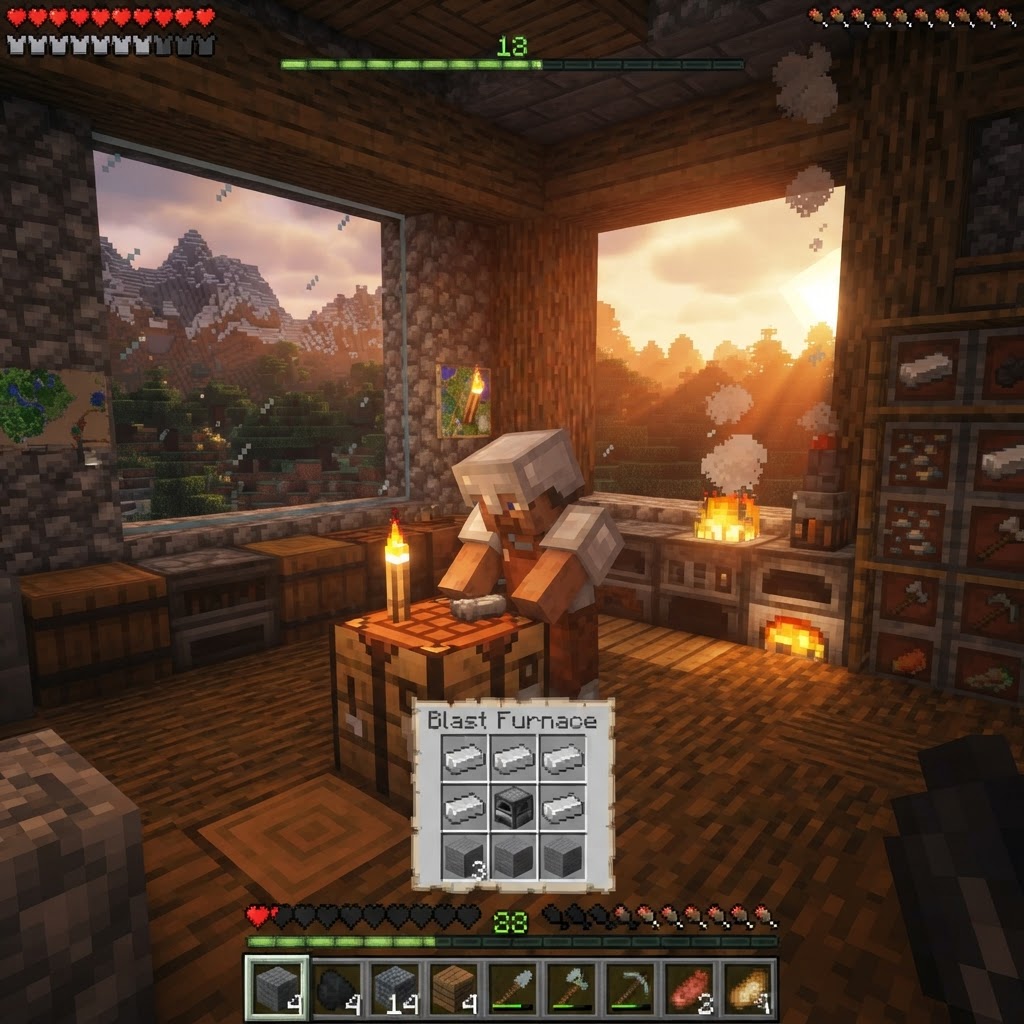
How to Make a Blast Furnace in Minecraft: Recipe & Uses
If you've been manually smelting ores one by one in a regular furnace, you're wasting serious time — the Minecraft blast furnace doubles your smelting speed for metals and ores, making it one of the m...
How to Make a Smoker in Minecraft: Recipe & Uses
If you're tired of waiting forever for your food to cook in a standard furnace, the smoker is the upgrade you didn't know you needed. It cooks food items at exactly twice the speed of a regular furnac...
STAY UPDATED
New blog posts, guides, and community tips delivered to your inbox.
No spam. Unsubscribe anytime.
Comments (0)
No comments yet. Be the first to share your thoughts!

