TABLE OF CONTENTS
How to Enchant Items in Minecraft: Complete Guide
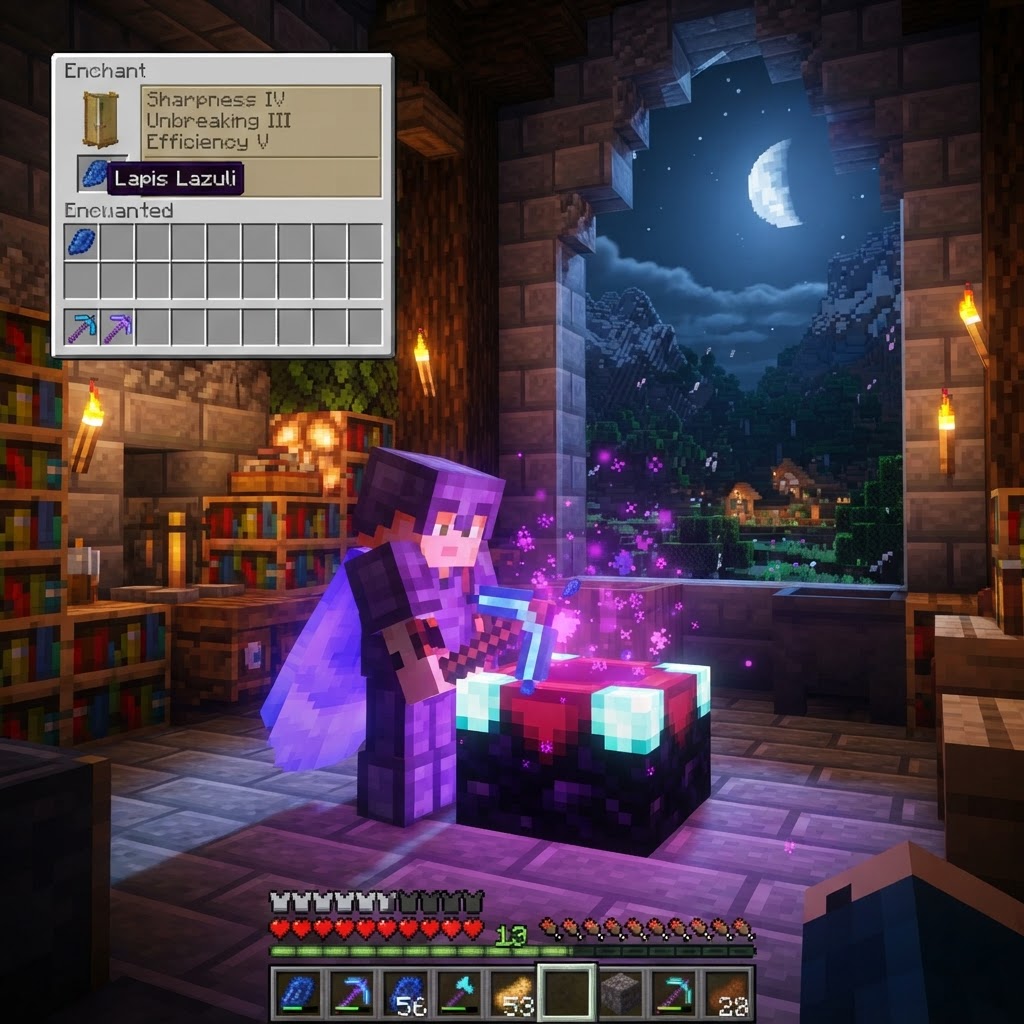
Enchanting transforms your basic gear into survival-defining tools — and if you're dying in the Nether, struggling with late-game mobs, or watching your best sword break too fast, you're almost certainly not enchanting efficiently. This guide goes far beyond the basics: we'll cover every method, every material decision, and every mistake that keeps players stuck with weak gear long after they should have progressed.
Setting Up Your Enchanting Table Correctly
Most players build an enchanting table too early and get garbage results — here's why.
The enchanting table isn't plug-and-play. An isolated table gives you a maximum enchantment level of 8, which is nearly useless past early game. To unlock level 30 enchantments — the strongest available — you need 15 bookshelves arranged in a specific pattern around the table.
Bookshelf Placement Rules:
- Bookshelves must be placed exactly 2 blocks away from the table (one air block gap between them)
- They can form a full ring: up to 15 shelves on the floor level, plus additional shelves stacked one block higher
- No blocks, torches, or items can occupy the gap between a bookshelf and the table or the enchantment level boost is broken
- Carpet on top of bookshelves does NOT block the bonus — this is useful for decoration
Standard 15-Bookshelf Layout:
Build a 5x5 ring of bookshelves around your table with the table centered, leaving the front open for access. Two layers of shelves are common but you only need 15 total — not 30.
To build 15 bookshelves you need 45 books and 90 wooden planks. Each book requires 3 paper and 1 leather, so budget your sugar cane and cow farming accordingly before you plan your enchanting room.
Using an Anvil to Enchant with Books
Anvils give you precision — the enchanting table gives you gambling.
The enchanting table is random. If you want a specific enchantment on a specific item, the anvil plus enchanted books is your real solution. Here's exactly how the system works:
- Obtain an enchanted book (from fishing, trading with librarian villagers, loot chests, or enchanting a book at the table)
- Place your item in the left anvil slot
- Place the enchanted book in the right slot
- Pay the XP cost shown and collect your enchanted item
Why librarian villagers are the most powerful source: A librarian offers a specific enchanted book at a set price. By placing a lectern, breaking it, and repeating until you get the enchantment you want, you can lock in a librarian who sells — for example — Mending books for 1 emerald. This is called villager trading manipulation and it's the backbone of every efficient enchanting setup.
Enchanting Methods: Full Comparison
Knowing which method to use when separates efficient players from frustrated ones.
| Method | Control Over Result | XP Cost | Best For |
|---|---|---|---|
| Enchanting Table (Lvl 30) | Low (random) | Moderate | Early-mid game gear, bulk enchanting |
| Anvil + Enchanted Book | High (specific) | Variable | Targeting specific enchants |
| Librarian Trading | Very High | Emeralds + XP | End-game optimization |
| Fishing | None (random) | None | Passive book farming |
| Loot Chests | None (random) | None | Early game luck |
| Grindstone | N/A (removes enchants) | Refunds some XP | Resetting bad enchants |
|---|
When to use each method:
- Days 1–20: Use enchanting table to get early Protection, Sharpness, Efficiency
- Mid-game: Start fishing and trading to build a book library
- End-game: Librarian villages + anvil for precise, max-level builds
Best Enchantments by Gear Type
Slapping random enchants on gear wastes XP and ruins your anvil penalty budget.
Understanding enchantment priority stops you from spending 30 levels on something that conflicts with a better enchant later.
Sword Priority:
- Sharpness V (or Smite V for undead farms)
- Looting III
- Unbreaking III
- Mending
- Sweeping Edge III (Java Edition only)
- Knockback II (situational — skip for most builds)
Armor Priority (each piece):
- Protection IV (don't mix protection types — they conflict for efficiency)
- Unbreaking III
- Mending
- Thorns III (helmet or chestplate — high durability cost, lower priority)
- Feather Falling IV (boots only — critical for survival)
- Depth Strider III or Frost Walker (boots — mutually exclusive)
Tools Priority:
- Efficiency V
- Fortune III (or Silk Touch — mutually exclusive, choose by use case)
- Unbreaking III
- Mending
| Enchantment Conflict Pairs | Why You Can't Combine Them |
|---|---|
| Silk Touch + Fortune | Opposite harvest mechanics |
| Mending + Infinity (Bow) | Game design limitation |
| Protection + Blast/Fire/Projectile Protection | Stacking rules make mixing inefficient |
| Depth Strider + Frost Walker | Mutually exclusive by design |
| Sharpness + Smite/Bane of Arthropods | Damage bonus types don't stack |
Common Mistakes
These errors cost players hours of wasted XP and ruined gear.
1. Enchanting before hitting Level 30
Enchanting at level 8 or 15 doesn't just give weaker enchants — it often gives single, low-tier enchants that waste your item's enchantment slots and add unnecessary prior work penalty. Always hit Level 30 with a full bookshelf setup before enchanting gear you actually care about.
2. Applying enchants in the wrong order on the anvil
Every anvil operation adds a prior work penalty. The order matters enormously. The rule: combine items with similar penalty levels together. Don't apply six books to one item one at a time — combine books together first, then apply the combined book to your item. This alone can save 20–40 levels on a fully enchanted piece.
3. Mixing Protection types on armor
Putting Fire Protection on your chestplate and Blast Protection on your leggings feels efficient but isn't. Protection IV on every piece provides broader, better coverage and doesn't waste enchantment slots on situational resistances.
4. Forgetting Mending is renewable
Many players treat Mending like an ultra-rare enchant. A single librarian manipulated to sell Mending books makes it abundant. Don't skip Mending because it seems too rare — fix your trading setup instead.
5. Using a grindstone on everything
Grindstones remove ALL enchantments including valuable ones. New players sometimes grindstone gear by accident. Only use it intentionally when you're stripping a bad enchant to start fresh.
6. Ignoring the enchanting table after early game
The enchanting table still has value end-game for farming enchanted books to combine. Enchanting a book at Level 30 gives you a random high-tier book that you can keep, sell, or combine. Many players abandon their table entirely once they have villagers, wasting a passive resource.
Pro Strategies
These techniques separate players with mediocre gear from those with fully optimized loadouts.
The Book-Combining Method (Anvil Efficiency)
Instead of applying 6 books directly to your sword (6 separate operations = massive penalty), combine Book A + Book B into AB, combine Book C + Book D into CD, combine AB + CD into ABCD, then apply ABCD to your sword. You've gone from 6 operations to 4, saving significant levels and staying under the "too expensive" threshold.
XP Farm Before Enchanting Room
A simple mob spawner XP farm — or a more powerful AFK Enderman farm — should come before you seriously invest in enchanting. Having a reliable Level 30 source means you can enchant, reroll bad results by grindstoning, and try again without setbacks.
Fishing for Books Passively
AFK fishing with a Luck of the Sea III rod generates enchanted books, bows, and rods constantly. It's not the fastest method but it's fully passive. Set it up while you build or mine and return to a chest full of books you can use or trade.
Lock Your Librarian Trades Early
When you find a village, immediately trade with each librarian at least once to "lock" their trades. Trades lock permanently after the first transaction. Then use lectern manipulation on unlocked librarians to hunt for Mending, Silk Touch, and Fortune III sellers. Name them with name tags once you've confirmed their stock.
Use Weakness + Golden Apple for Zombie Villagers
If you need librarians and your village is sparse, you can cure zombie villagers. Cured villagers offer massive discounts (sometimes 1 emerald per trade) making your enchanted book economy trivially easy to sustain.
Final Takeaways
Enchanting in Minecraft isn't a single system — it's three interlocking systems (enchanting table, anvil, and trading) that you need to use together. The players who struggle are almost always relying on just one of them. Build your bookshelf setup correctly from day one, establish a librarian trading hall as soon as you reach mid-game, and always plan your anvil combination order before you start applying books.
The single highest-leverage move you can make right now: find a village, manipulate a librarian for Mending, and apply it to every critical piece of gear. That one enchant — paired with any decent XP farm — means your best tools and armor become effectively permanent. Everything else is optimization on top of that foundation.
RELATED ARTICLES
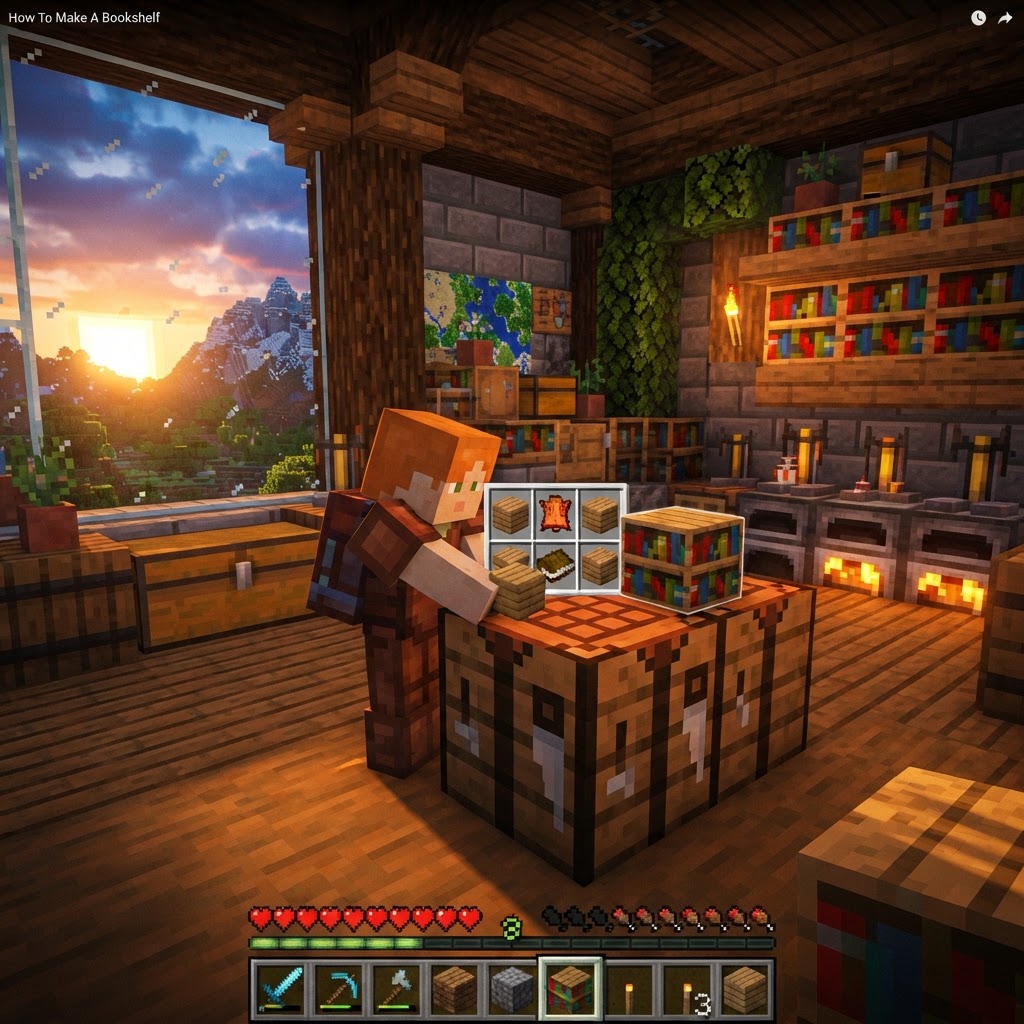
How to Make a Bookshelf in Minecraft: Recipe & Uses
Bookshelves aren't just decoration — they're the gateway to the most powerful enchantments in the game, and most players don't build them until they realize their enchanting table is severely underpow...
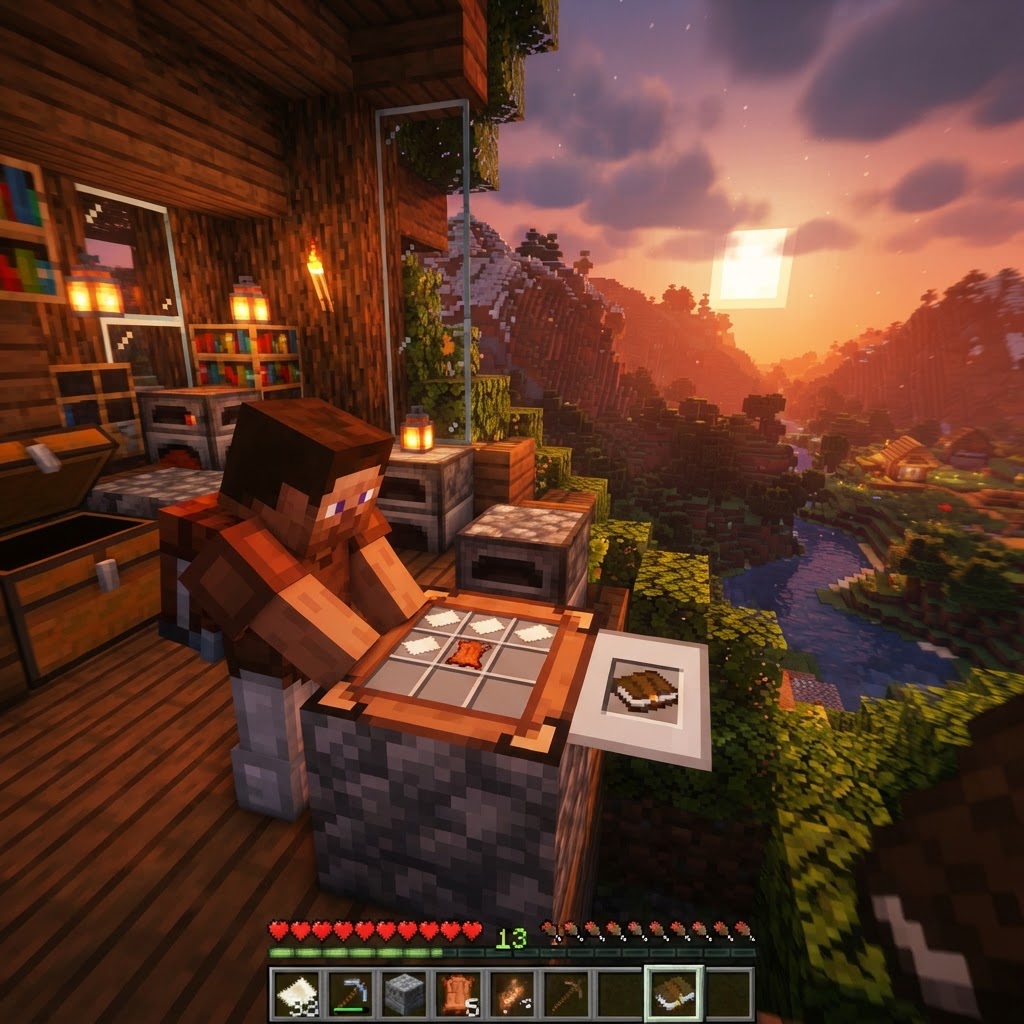
How to Make a Book in Minecraft: Easy Recipe & Uses
You're probably here because you just hit a wall — enchanting, writing, or crafting something advanced — and realized you need books but aren't sure how to get them efficiently. Books are one of Minec...
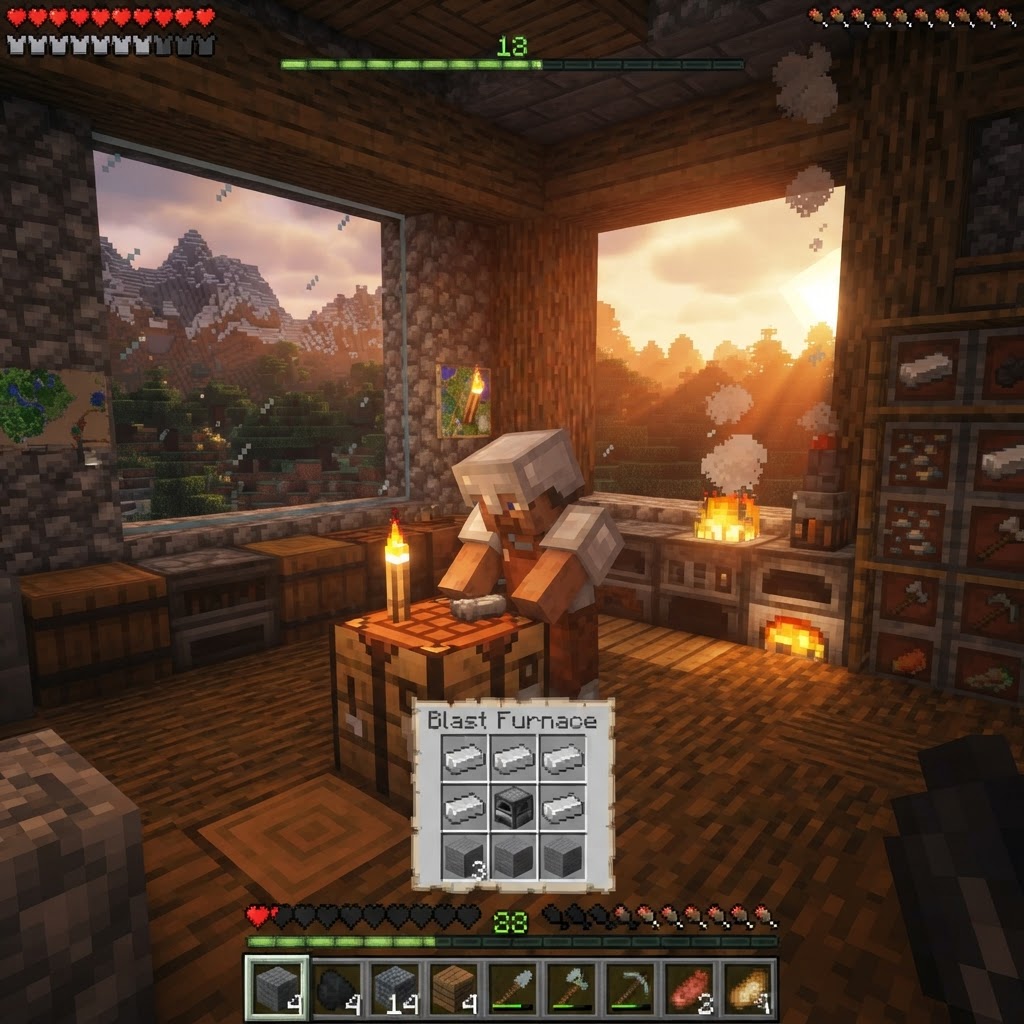
How to Make a Blast Furnace in Minecraft: Recipe & Uses
If you've been manually smelting ores one by one in a regular furnace, you're wasting serious time — the Minecraft blast furnace doubles your smelting speed for metals and ores, making it one of the m...
STAY UPDATED
New blog posts, guides, and community tips delivered to your inbox.
No spam. Unsubscribe anytime.
Comments (0)
No comments yet. Be the first to share your thoughts!

