TABLE OF CONTENTS
Minecraft Update July 2026: Java vs Bedrock — Full Breakdown
The Minecraft update 2026 cycle has delivered some of the most significant platform-specific changes in years — and knowing which version got what matters more than ever. This breakdown covers every major addition across Java Edition 1.22 and Bedrock's parallel release, compares feature parity, and tells you exactly what to expect whether you're playing on PC, console, or mobile.
What's New in Java 1.22 — The Minecraft Update 2026 Deep Dive
Java Edition's flagship release introduces biome overhauls, combat refinements, and long-requested quality-of-life fixes.
Java 1.22, internally codenamed "The Verdant Expansion," shipped in June 2026 with a heavier focus on world generation and combat balance than any release since 1.17. Here's what changed:
- Deepwood Biome — A new old-growth variant sits between Mega Taiga and Dark Forest, spawning exclusive Fernwood and Twisted Oak tree types used in new crafting recipes.
- Combat Rework Phase 3 — Shields now have a 3-durability-per-block system, dual-wielding daggers (a new weapon tier) deal 20% bonus backstab damage, and sweep attacks are now toggleable in gameplay settings.
- Villager Reputation Overhaul — Reputation now tracks per-village rather than globally. Griefing a desert village no longer tanks your standing in a jungle village.
- Spectral Lantern Block — Craftable with Glowstone Dust + Amethyst Shards, emits light level 15, and can be waterlogged. Finally, an underwater light source that doesn't require mods.
- Inventory Sorting (Native) — Shift+Middle Click now sorts any inventory container. No more installing Inventory Tweaks just for basic organization.
- Deepwood Biome — Yes, Bedrock gets it too, with identical generation rules and the same Fernwood/Twisted Oak trees. Parity win.
- Sculk Sensor Range Increase — Detection radius expanded from 8 to 12 blocks. Redstone engineers on Bedrock finally get a viable sensor for large-scale farms.
- Armadillo Shield Crafting — The Wolf Armor from 1.20 now has an Armadillo Shell upgrade path, increasing durability by 40% and adding fire resistance 1.
- Marketplace Add-On SDK 2.0 — A new scripting layer for Marketplace creators using JavaScript-based behavior packs. Not relevant to vanilla players but significant for server operators.
- Render Dragon Optimization Pass — Chunk loading on Android mid-range devices (tested on Snapdragon 778G hardware) improved by approximately 22% in internal benchmarks.
- Minimum Java version bumped to Java 21 (previously Java 17). If you're running a server on Java 17, update before installing 1.22 or your server jar will refuse to launch.
- Chunk loading rewrite reduces memory allocation per chunk by ~15% according to the official changelog. Large exploration-heavy servers will see meaningful tick rate stability improvements.
- New data pack function syntax — `schedule.tick` functions now support conditional delays using `unless` and `if` modifiers. Datapack developers using Smithed or vanilla-first toolchains will want to audit existing packs for deprecated syntax.
- Log4j is updated to 2.24.1. Still relevant for server security hygiene.
- Render Dragon now supports ray tracing on AMD RDNA 2 GPUs without requiring DXR-specific hardware flags. RTX 3070-equivalent AMD cards (RX 6700 XT) can now enable experimental ray tracing in Bedrock for Windows.
- Server software update: Bedrock Dedicated Server (BDS) 1.22.0 requires Ubuntu 22.04 LTS or Windows Server 2022 minimum. Older Ubuntu 20.04 deployments need OS-level upgrades.
- Fabric Loader 0.16.5 — Compatible with Java 1.22. Update via the Fabric installer before loading any mod instances.
- Forge 1.22-49.0.1 — Released, but several major mods still pending update. Check individual mod pages.
- NeoForge 21.4.0 — Fastest to release a 1.22 build; recommended for new modpack setups.
- Sodium 0.6.4 — Compatible with Fabric on 1.22. Performance gains from 1.22's chunk loading changes stack with Sodium's renderer optimizations.
- Create Mod — Version 6.1 targeting 1.22 is in active development. Do not load Create 6.0 on a 1.22 instance — world corruption risk exists due to contraption rendering changes.
- Inventory Tweaks — Effectively deprecated. Native sorting (Shift+Middle Click) replaces its core function. The mod author has confirmed they will not port to 1.22.
The new Deepwood Biome alone changes early-game routing. Fernwood Planks have a blast resistance of 6 (vs Oak's 3), making them worth hunting down for early shelter in survival worlds.
Bedrock's 2026 Feature Drop — Parity, Exclusives, and What's Still Missing
Bedrock's 2026 update closes long-standing parity gaps while introducing marketplace-integrated features Java won't receive.
Bedrock Edition's parallel update (version 1.22.0 on mobile/console, matched by the Windows 11 Bedrock client) shipped in late June 2026. The highlights:
What Bedrock still doesn't have: the Combat Rework Phase 3 changes. Daggers, the backstab mechanic, and sweep attack toggles are Java-exclusive for now. Mojang has not committed to a Bedrock parity timeline for these features.
Java vs Bedrock — 2026 Update Feature Comparison
Side-by-side breakdown of every major feature so you can decide which version serves your playstyle.
| Feature | Java 1.22 | Bedrock 1.22.0 |
| Deepwood Biome | ✅ Full implementation | ✅ Full implementation |
| Fernwood & Twisted Oak | ✅ | ✅ |
| Combat Rework Phase 3 | ✅ Daggers, backstab, sweep toggle | ❌ Not included |
| Spectral Lantern Block | ✅ | ❌ Not yet |
| Villager Reputation (per-village) | ✅ | ❌ Still global |
| Native Inventory Sorting | ✅ Shift+Middle Click | ❌ |
| Sculk Sensor Range (12 blocks) | ❌ Unchanged at 8 blocks | ✅ |
| Armadillo Shell Wolf Armor Upgrade | ❌ | ✅ |
| Render Dragon Optimization | N/A (uses LWJGL renderer) | ✅ ~22% improvement |
| Marketplace SDK 2.0 | N/A | ✅ |
| Cross-Platform Multiplayer | ❌ | ✅ |
The gap is real but nuanced. Java wins on gameplay depth and combat complexity. Bedrock wins on accessibility, device optimization, and multiplayer reach. Neither version is strictly better in 2026 — it depends entirely on your use case.
Technical & Performance Changes in the Minecraft Update 2026
Under the hood improvements that affect server operators, modpack builders, and anyone running large-scale worlds.
Java Edition technical changes:
Bedrock Edition technical changes:
Mod & Add-On Impact — What Breaks, What Works, What's Better
The 2026 update shifts mod compatibility more than usual — here's your damage assessment.
Java 1.22's combat rework and new weapon tier (daggers) are the primary mod-breakers. Loaders and major mods status as of early July 2026:
For Bedrock, the Marketplace SDK 2.0 introduces breaking changes for behavior packs using the old `minecraft:entity` component format. Any add-on built before June 2026 needs to be tested against 1.22.0 before deployment on servers.
Final Verdict — Which Version Wins the Minecraft Update 2026?
The answer depends on what you're actually building — here's how to choose.
The Minecraft update 2026 delivers meaningful improvements to both versions, but they're solving different problems. Java 1.22 is a depth update — more combat complexity, better survival mechanics, native tooling improvements that modders and datapackers will leverage immediately. Bedrock 1.22.0 is a reach update — better hardware support, parity gains on biomes, and infrastructure changes that make large-scale server and Marketplace ecosystems more viable.
Choose Java 1.22 if you're playing survival with friends on PC, running a modded server, or building datapacks. The combat rework alone reshapes how endgame PvE functions, and native inventory sorting removes one of the most persistent quality-of-life friction points in the game's history.
Choose Bedrock 1.22.0 if you're playing cross-platform with console or mobile players, running a Marketplace-connected server, or you're on a mid-range device where the Render Dragon optimization pass makes a real difference to your framerate.
Neither version is being left behind in 2026 — but the gap in gameplay feature depth continues to favor Java for serious players. Mojang's parity effort is real but slow, and Combat Rework Phase 3 being Java-exclusive is a meaningful divide that won't close before 2027 at the earliest.
RELATED ARTICLES
Minecraft Update News: What’s New in Java and Bedrock?
The latest Minecraft update news covers significant changes across both Java and Bedrock editions, and keeping track of what dropped where isn't always straightforward. This guide breaks down the most...
Minecraft Survival Iron Farm: Build a Compact, High-Yield Design
Building a reliable Minecraft iron farm is one of the highest-value infrastructure projects in any survival world. This guide covers the mechanics behind iron golem spawning, walks you through a compa...
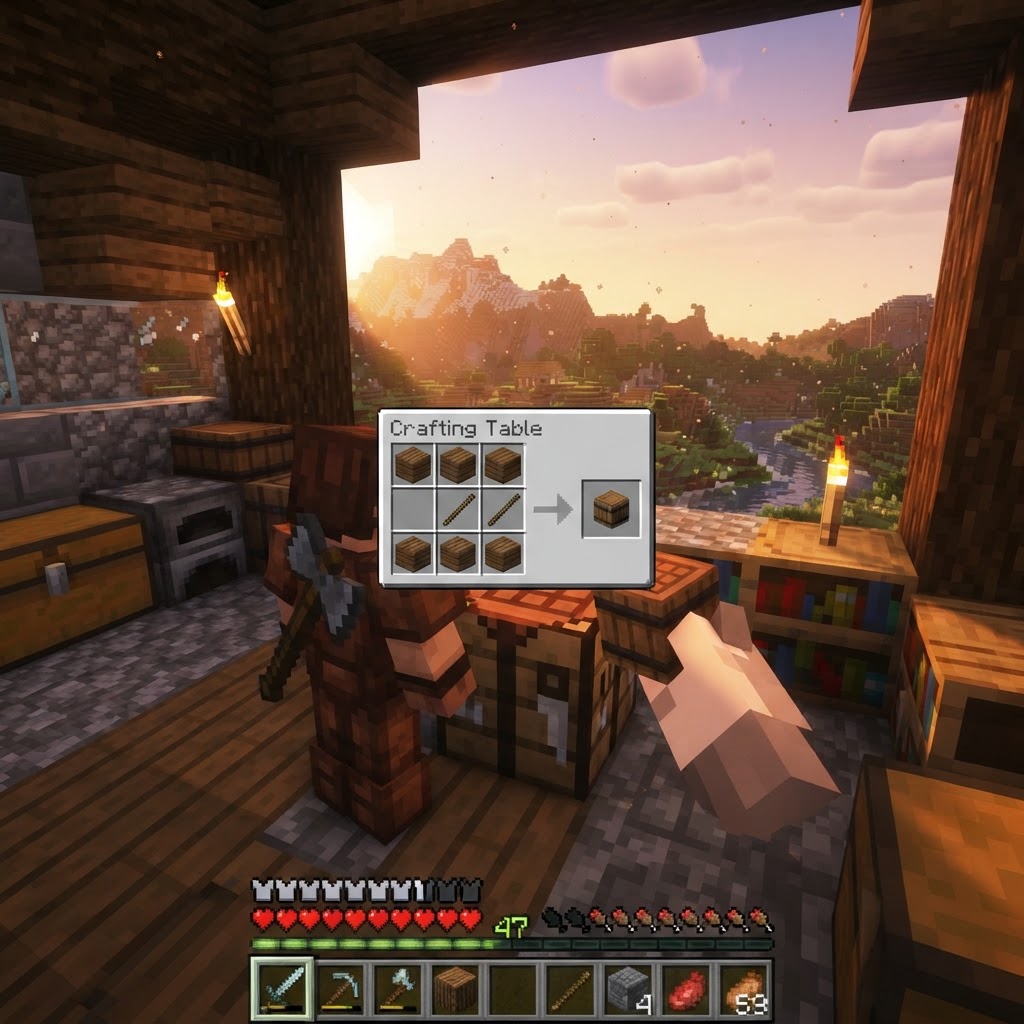
How to Make a Barrel in Minecraft: Recipe & Uses
Running out of chest space is one of the most frustrating mid-game problems in Minecraft, and barrels are one of the best solutions most players overlook. Unlike chests, barrels work even when complet...
STAY UPDATED
New blog posts, guides, and community tips delivered to your inbox.
No spam. Unsubscribe anytime.
Comments (0)
No comments yet. Be the first to share your thoughts!

