TABLE OF CONTENTS
How to Get a Nautilus Shell in Minecraft: All Methods
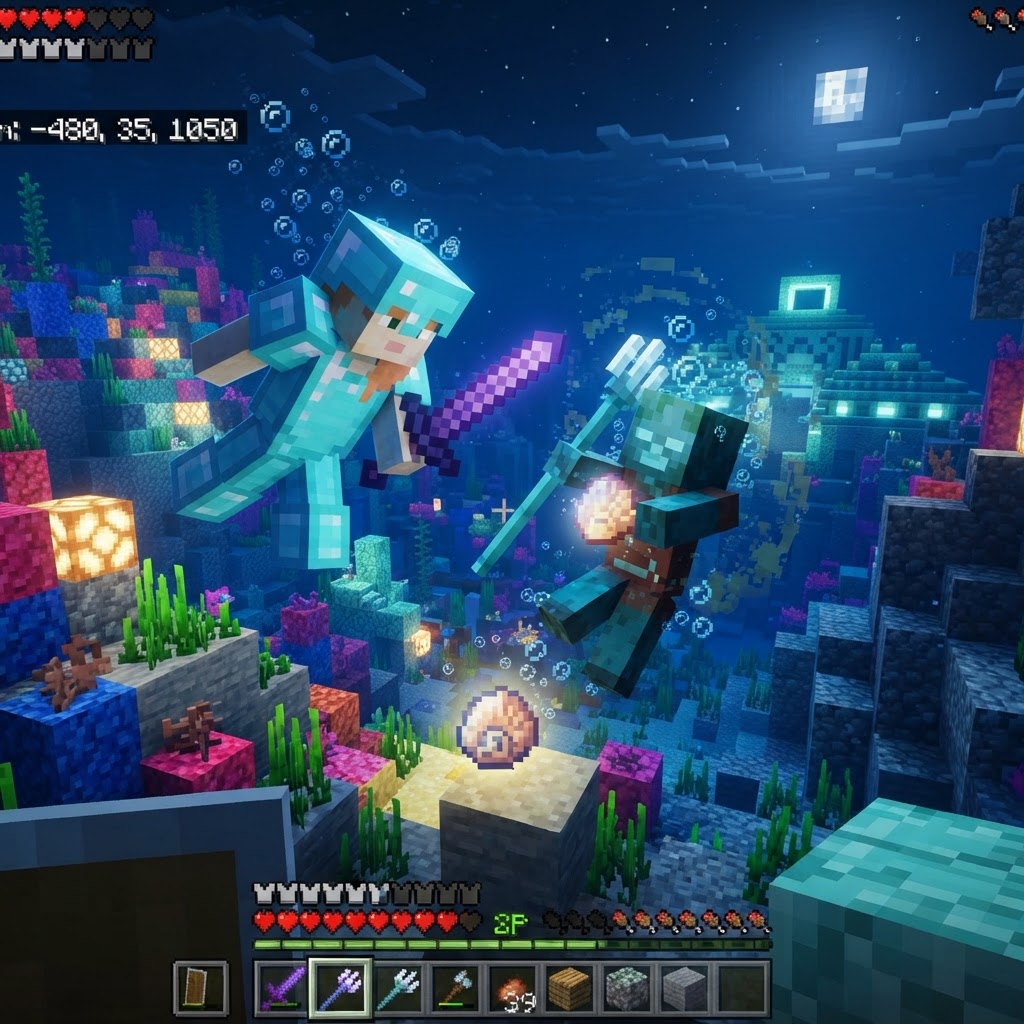
Nautilus shells are one of Minecraft's most deceptively hard-to-find crafting materials — you need five of them just to craft a single Conduit, and without a Conduit, building an underwater base or ocean monument raid becomes a brutal endurance test against constant drowning. Whether you're deep into an ocean biome build or prepping for a Drowned farm, knowing every reliable method to farm nautilus shells will save you hours of frustration.
Why Nautilus Shells Are Worth Farming Aggressively
Understanding the end goal makes the grind make sense.
The entire reason players hunt nautilus shells comes down to one structure: the Conduit. A Conduit is crafted with 8 nautilus shells surrounding a Heart of the Sea — and it grants you "Conduit Power," a combined effect of Water Breathing, Night Vision, and Haste while you're submerged near it. For anyone building underwater or raiding ocean monuments, this is practically mandatory.
The problem is that nautilus shells have no single reliable, fast drop source. They come from multiple methods, each with trade-offs in speed, resource investment, and game stage. Most players stumble onto one method and grind it inefficiently when they could be stacking multiple sources simultaneously.
| Conduit Crafting Cost | Quantity Needed |
|---|---|
| Nautilus Shells | 8 (per Conduit) |
| Heart of the Sea | 1 (per Conduit) |
| Conduit Power Range (blocks) | 32–96 depending on activation frame size |
Method 1: Fishing for Nautilus Shells
Slow but accessible even in early game with zero combat required.
Fishing is the first method available to most players, but it's heavily dependent on your rod enchantments. Nautilus shells are classified as a "treasure" catch in Minecraft's fishing loot table, which means you will almost never catch one with a basic unenchanted rod.
What you actually need to fish efficiently:
- A fishing rod enchanted with Luck of the Sea III — this is non-negotiable. It shifts the treasure probability from roughly 5% to around 10–11.5%.
- Lure III reduces wait time between catches, so you get more attempts per minute.
- Fish in open water (no blocks within a 5×4×5 area around the bobber) to qualify for the open water bonus that makes treasure catches possible.
Steps to optimize fishing for nautilus shells:
- Craft an enchanting table and get to level 30 enchants.
- Prioritize a rod with Luck of the Sea III — combine books if needed using an anvil.
- Add Lure III to the same rod (Mending is also worth it for longevity).
- Find open ocean or a large lake — cramped ponds disqualify you from treasure drops.
- Fish during rain (slightly faster bobber action) to maximize attempts.
- Ocean ruins — Drowned here have higher spawn rates and many already hold shells
- Deep ocean biomes at night — higher natural spawn density
- Rivers — easier to see and fight but lower shell-carrier spawn rate
- Always check his trades immediately when he spawns — he despawns after 2.5 in-game days.
- Keep an emerald stockpile from villager trading or mining — 5 emeralds per shell adds up fast if you need all 8.
- If he doesn't sell nautilus shells, he won't gain new trades. Move on.
- Find a large ocean or river biome.
- Build a dark spawn platform underwater (or use a river channel system).
- Use water currents to push Drowned into a collection funnel.
- Drop them into a kill chamber — either fall damage or manual hits to collect XP and drops.
- Use hoppers and chests beneath the kill chamber to collect shells automatically.
Method 2: Killing Drowned Holding a Nautilus Shell
The fastest early-to-mid game method if you know where to look.
Drowned are the undead mobs that spawn in oceans, rivers, and underwater ruins — and some of them spawn already holding a nautilus shell in their off-hand. When you kill a Drowned holding a nautilus shell, it has a 8-9% chance on Java and a 3% chance on Bedrock to drop it. That gap is significant.
The key insight most players miss: not all Drowned carry nautilus shells. Only a specific subset spawn with them. You're not guaranteed a shell from every Drowned kill, so volume is everything here.
| Platform | Drop Chance (Drowned w/ Nautilus Shell) | Looting III Bonus |
|---|---|---|
| Java Edition | ~8–9% | Increases slightly |
| Bedrock Edition | ~3% | Increases to ~8% |
| Both Editions | Must be holding shell visibly | N/A if no shell in hand |
Where to find Drowned with nautilus shells most reliably:
Method 3: Buying From the Wandering Trader
The most consistent single-shell method, but expensive and time-gated.
The Wandering Trader — that passive merchant who shows up randomly with two llamas — occasionally sells nautilus shells directly. The trade costs 5 emeralds per shell, and each individual Wandering Trader can sell you a maximum of 3–5 shells before the trade locks out.
This method isn't a primary farm, but it fills gaps. When you're at 6 shells and the Wandering Trader spawns, buying the last two you need is faster than another hour of fishing.
How to use the Wandering Trader efficiently:
Method 4: Building a Drowned Farm
The endgame solution for players who want shells on demand.
If you need more than one Conduit, or you just want shells without the grind, a dedicated Drowned farm is the answer. The principle is simple: funnel Drowned into a kill chamber where you collect drops automatically or with minimal effort.
Basic Drowned farm concept:
The most efficient Drowned farms use river biomes because the narrow channel concentrates spawns, and rivers count as valid Drowned spawn locations. Ocean-based farms work but require more aggressive mob-cap management (light up the surroundings to prevent other mobs from eating into the spawn cap).
| Farm Type | Build Complexity | Shells per Hour (approx.) | Notes |
|---|---|---|---|
| Manual Ocean Hunting | None | 1–3 | Inconsistent, combat-heavy |
| Fishing (Luck III rod) | Low | 1–3 | Passive, no combat |
| River Drowned Farm | Medium | 4–8 | Best mid-game investment |
| Ocean Monument Farm | High | 6–12 | Requires Guardian farm setup |
Common Mistakes Players Make Farming Nautilus Shells
These errors cost hours — here's how to avoid all of them.
1. Fishing with an unenchanted rod.
This is the single biggest time-waster. Without Luck of the Sea, nautilus shells are nearly impossible to fish up. Players spend 2 hours fishing and wonder why they got nothing useful.
2. Killing every Drowned instead of targeting shell-carriers.
Time spent killing Drowned without visible nautilus shells in their off-hand is wasted effort if shells are your only goal. Prioritize visually confirming the shell before engaging.
3. Ignoring the Wandering Trader entirely.
Most players dismiss him as useless. He's not a farm, but as a supplement when you're close to your shell count goal, 5 emeralds per shell is worth it.
4. Building ocean farms without clearing nearby mob spawns.
Leaving underwater caves and ocean floor unlit destroys your spawn rates because other mobs eat the mob cap. Light everything within 128 blocks of your farm.
5. Not combining methods.
Players pick one method and grind it exclusively. The fastest route to 8 shells is fishing passively while a Drowned farm runs in the background.
Pro Strategies for Efficient Nautilus Shell Collection
For players who want to optimize every minute of the grind.
Stack AFK farming with active play.
Set up your Drowned farm in a river and AFK it while you're fishing nearby or doing other tasks. Both produce shells simultaneously. This alone doubles your shell-per-hour rate.
Use a librarian villager to get Luck of the Sea III books cheaply.
Reset a librarian's trades by breaking and replacing their lectern until they offer Luck of the Sea III. Lock the trade in and craft your maxed fishing rod before you spend a minute at the water.
On Bedrock, trade for shells aggressively.
The Bedrock drop rate is so low that trading with Wandering Traders and building farms are disproportionately more valuable than manual hunting. Adjust your strategy to the platform you're on.
Target ocean ruins first.
Ocean ruins are guaranteed Drowned spawn locations with higher-than-average rates of shell-carrying variants. Early in a world, raiding every ocean ruin you find is the fastest way to accumulate shells before your farm is built.
Looting III sword matters.
Equip a sword with Looting III when farming Drowned manually. On Bedrock especially, this can push the shell drop rate from ~3% up to roughly 8% — nearly tripling your yield per kill.
Conclusion: The Fastest Path to 8 Nautilus Shells
Nautilus shells aren't a rare drop you get lucky with — they're a grind resource you need a system for. The takeaways are clear: never fish without Luck of the Sea III, always check Drowned for visible shells before engaging, use the Wandering Trader as a supplement not a primary source, and build a river Drowned farm as soon as you're comfortable with redstone and water mechanics.
The players who struggle are the ones who pick one method and assume it's the only option. Stack fishing with farm AFK sessions, raid ocean ruins early, and apply Looting III to your sword for manual hunts. Eight nautilus shells stops being a grind and starts being a checklist you knock out in a single focused session.
RELATED ARTICLES

How to Make a Book in Minecraft: Easy Recipe & Uses
You're probably here because you just hit a wall — enchanting, writing, or crafting something advanced — and realized you need books but aren't sure how to get them efficiently. Books are one of Minec...

How to Make a Blast Furnace in Minecraft: Recipe & Uses
If you've been manually smelting ores one by one in a regular furnace, you're wasting serious time — the Minecraft blast furnace doubles your smelting speed for metals and ores, making it one of the m...
How to Make a Smoker in Minecraft: Recipe & Uses
If you're tired of waiting forever for your food to cook in a standard furnace, the smoker is the upgrade you didn't know you needed. It cooks food items at exactly twice the speed of a regular furnac...
STAY UPDATED
New blog posts, guides, and community tips delivered to your inbox.
No spam. Unsubscribe anytime.
Comments (0)
No comments yet. Be the first to share your thoughts!

